

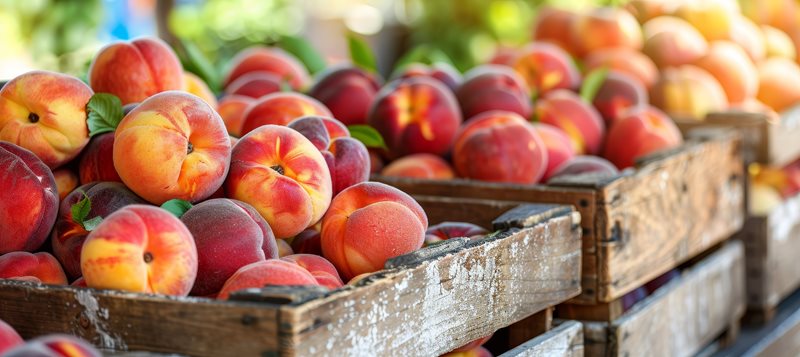
Around 167 containers carrying South African stone fruit are stuck at sea after rising tensions in the Middle East forced shipping lines to abandon their usual routes, putting millions of dollars in export revenue in jeopardy.
The hold-ups are linked to increased insecurity along vital maritime passages, particularly those connecting to the Red Sea and the Suez Canal, which serve as crucial channels for South Africa’s agricultural exports bound for Europe, the Middle East, and parts of Asia.
Vessels originally destined for Gulf ports were blocked when the Strait of Hormuz became effectively impassable, according to CGTN. Exporters are now scrambling to identify alternative buyers to prevent the perishable fruit from spoiling.
Although South Africa contributes roughly 1% of the global stone fruit supply, it is a leading exporter of citrus, apples, pears, grapes, and plums, with about half of its produce shipped abroad annually, generating billions in revenue.
Key export markets include Europe, the Middle East, and Asia, with the Middle East representing a significant portion of horticultural sales. This extensive international reach explains why interruptions to shipping lanes caused by regional conflicts pose serious risks to the country’s fruit trade.
Shipping companies are increasingly diverting cargoes around the Cape of Good Hope to avoid conflict zones, considerably lengthening transit times.
Stone fruit has a limited shelf life, and extended voyages—even in refrigerated conditions—can compromise quality, reduce market prices, or render shipments unsellable.
Industry insiders say the effects are already visible. Terry Gale, chairman of Exporters Western Cape, stated, “The fruit left the packhouse in perfect condition, but it only remains good for a limited time.”
The backlog of 167 containers illustrates the scale of disruption confronting South Africa’s fruit industry, which relies on precise logistics to meet strict international delivery schedules.
Exporters now face financial losses and potential reputational harm, as missed deadlines could strain long-standing relationships with overseas clients.
Costs are rising rapidly, with freight charges nearly doubling from around $4,000 to $8,000 per container, intensifying the economic pressure on producers.
In some cases, the financial burden has shifted entirely to local farmers. One exporter remarked, “It has become South Africa’s problem… we cannot allow the fruit to rot at sea.”
The Middle East remains a major market for South African produce, accounting for a significant portion of the roughly $1.3 billion in agricultural exports to the region.
With so many shipments affected, the situation highlights the vulnerability of global food supply chains to geopolitical disruptions.
As the crisis continues, exporters are hoping for a rapid easing of tensions, even as losses accumulate and risks to both quality and revenue grow.