

South Africa intends to quickly scale up a newly established credit-guarantee fund aimed at attracting billions of dollars in private investment for infrastructure, as the government works to address power shortages and transportation bottlenecks that have hindered economic growth.
Projects supported by the programme will include electricity transmission lines, water systems, ports, and freight rail—areas considered crucial for boosting growth in Africa’s most industrialised nation.
Oversight will be provided by the Development Bank of Southern Africa (DBSA), which funds infrastructure projects throughout the region.
Mpho Mokwele, group executive for coverage and origination at the DBSA, told Bloomberg, “It’s going to be a major injection in a very short timeframe. We now have the fiscal headroom to issue additional guarantees for our infrastructure projects and programmes.”
Historically, South Africa has leaned on sovereign guarantees to support struggling state-owned enterprises, especially in energy and transport, though these carry financial risk if companies fail to repay debts.
Current contingent liabilities linked to these guarantees are estimated at roughly 661 billion rand (around $40 billion), Bloomberg reported.
The new credit-guarantee fund is designed to ease government exposure while helping infrastructure initiatives attract private capital.
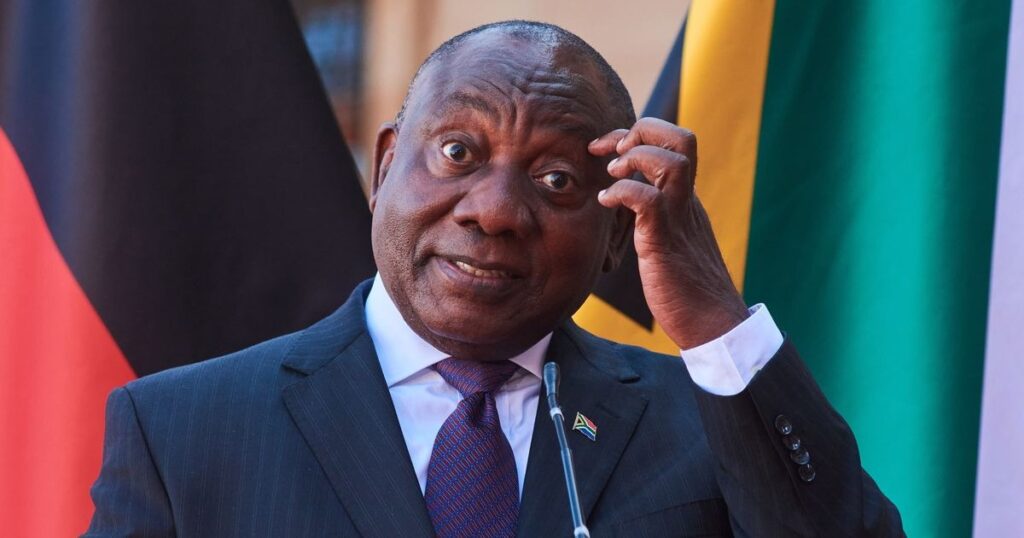
President Cyril Ramaphosa has aligned the programme with a broader infrastructure agenda, having earmarked 1.07 trillion rand for investment over the next three fiscal years.
According to Mokwele, the fund could mobilise far more than its initial capital of $500 million, potentially raising up to four times that amount as it gains credit ratings and investor confidence.
Several international development finance institutions have already signaled interest in supporting the initiative.
The fund has secured $350 million from the World Bank International Bank for Reconstruction and Development, while other prospective backers include the African Development Bank, the International Finance Corporation, Germany’s KfW, and South Africa’s Industrial Development Corporation.
Interest has also emerged from a local commercial bank, though Mokwele declined to name it before agreements are finalised.
He added, “When one institution joins, others usually follow. It signals to the market that they are keen to participate and support government efforts to unlock infrastructure.”
The National Treasury of South Africa is expected to take up to 20% equity in the fund, while public-sector participation through the DBSA could rise to about 30%.
South Africa faces enormous infrastructure demands, including expanding the national electricity transmission network by 14,000 kilometres to connect renewable energy projects in western regions, a project estimated to cost 440 billion rand.
Upgrades to ports and freight rail lines—critical for mineral and agricultural exports—may require an additional 330 billion rand, according to Bloomberg.
Mokwele identified the government’s independent transmission programme as one of the first likely to benefit, aiming to attract private investment for national electricity grid expansion.
He clarified that the fund is not limited to energy projects: “It’s meant to support infrastructure projects and programmes holistically,” encompassing hospitals and student housing.
Water projects managed by the Trans-Caledon Tunnel Authority, which oversees some of the country’s largest bulk water supply schemes, are also expected to gain support.
Additionally, the DBSA will operate a public-sector participation unit to attract private investment into South Africa’s logistics sector, Mokwele said.