

Africa loses over $120 billion each year on hydrocarbons, an enormous capital outflow that continues to deny the continent the investment required for industrial growth, according to Nigeria’s Minister of State for Petroleum Resources, Senator Heineken Lokpobiri.
Speaking at the opening of the ongoing Nigeria International Energy Summit in Abuja, Lokpobiri explained that much of Africa’s energy expenditure is directed toward importing refined petroleum products and related services, instead of strengthening local production and expertise across the continent.
He noted that the impact goes beyond monetary losses, describing it as a systemic issue that highlights lost chances for value addition, employment creation, and broad-based economic development in Africa.
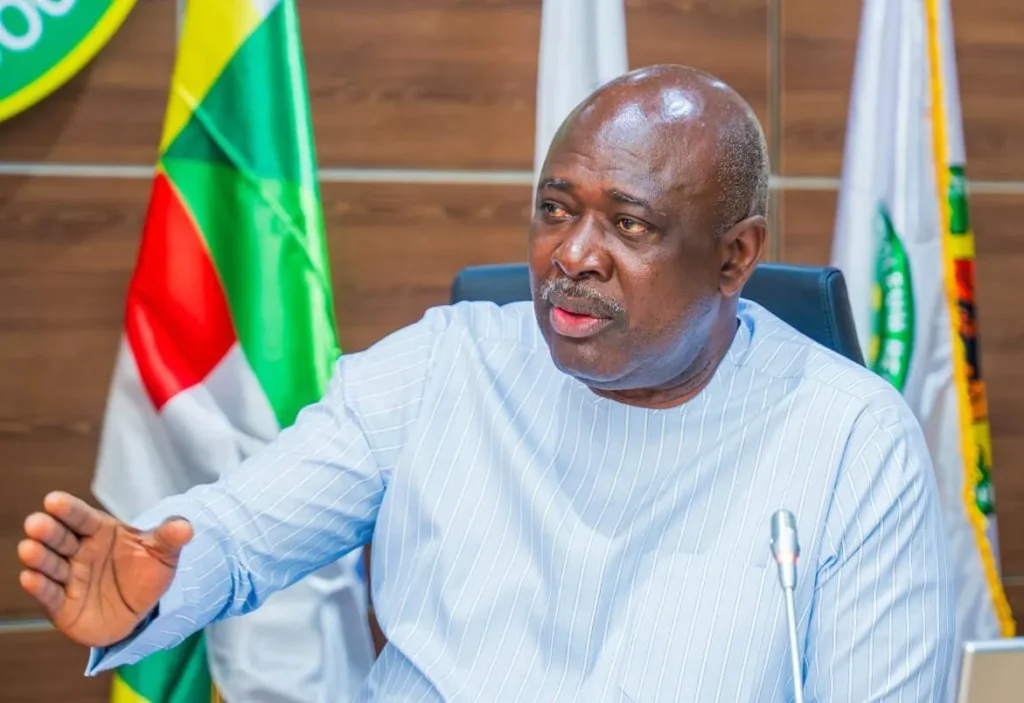
At the heart of the matter, he said, is the need for Africa to keep a significant share of this expenditure within its own economies through local processing, infrastructure expansion, and deeper industrial involvement an approach he believes could fundamentally reshape the continent’s economic outlook.
Lokpobiri stressed that Africa’s energy concerns should be framed within the context of economic independence and inclusive development, rather than limited discussions around energy sufficiency alone.
By ensuring that more hydrocarbon-related value remains within Africa, he said the continent could create additional fiscal room to fund critical sectors such as health, education, infrastructure, security, and technology.
He also used the occasion to reiterate his call for backing the proposed African Energy Bank, which is expected to be based in Nigeria. He cautioned that inadequate financing of Africa’s energy sector could intensify poverty, particularly as population growth accelerates. According to him, Nigeria has already met its responsibilities as the prospective host of the institution.
On the global energy transition, Lokpobiri challenged claims that oil and gas are nearing obsolescence, referencing projections from the International Energy Agency and OPEC that suggest fossil fuels will continue to play a central role in the global energy mix for many years.
He emphasized that no country is walking away from oil and gas, adding that Nigeria and Africa at large must prioritize reliable, accessible, and affordable energy.
Describing the summit as a turning point, Lokpobiri called on African leaders and investors to shift from conversation to concrete action in tackling energy poverty, while positioning the continent as an attractive and competitive hub for energy investment.