

Nigeria is advancing its abundant natural gas resources as a key driver of Africa’s industrial development and energy transition, amid persistent power deficits and broader growth challenges across the continent.
Addressing participants at the opening of the Nigeria International Energy Summit 2026 in Abuja, the Group Chief Executive Officer of Nigerian National Petroleum Corporation (NNPC) Ltd, Bashir Bayo Ojulari, said Nigeria is uniquely placed by both capacity and responsibility to deploy its natural gas resources in support of Africa’s economic advancement while helping to maintain global energy stability.
He described natural gas as a pillar of Nigeria’s long-term development agenda, highlighting its dual role as a lower-carbon transition fuel and a catalyst for industrial growth.
According to Ojulari, gas underpins Nigeria’s vision for a cleaner energy future, industrial expansion, and export-driven growth.
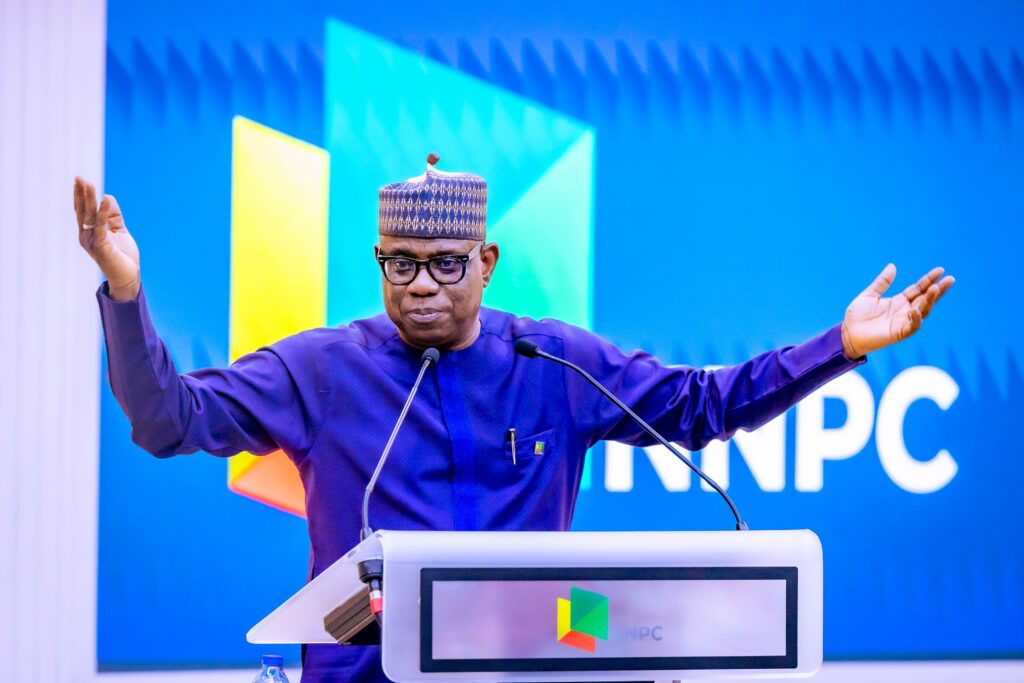
He characterised Africa’s energy dilemma as a balance between availability, affordability, and sustainability, noting that over 600 million people across the continent remain without access to electricity.
Ojulari stressed that Africa’s energy transition must reflect its unique socio-economic conditions, rather than replicate models adopted by developed economies. He said the continent requires a fair, inclusive, and people-focused transition that addresses poverty and supports industrial development.
With estimated reserves of about 37 billion barrels of crude oil and 209 trillion cubic feet of natural gas, Ojulari said Nigeria is well positioned to play a leadership role. He added that NNPC Ltd’s mandate goes beyond profit-making to include promoting regional economic resilience and shared prosperity.
To expand domestic gas use, he said NNPC Ltd has introduced a Gas Masterplan and is pushing ahead with major infrastructure investments, including the Obiafu-Obrikom-Oben pipeline, the Ajaokuta-Kaduna-Kano gas pipeline, and upgrades to the Escravos-Lagos Pipeline System.
He noted that these infrastructure projects are intended to open up broad economic opportunities rather than simply transport gas.
The renewed focus, Ojulari said, reflects Nigeria’s determination to support Africa’s industrialisation with dependable and affordable energy, positioning natural gas as a central pillar of that growth.