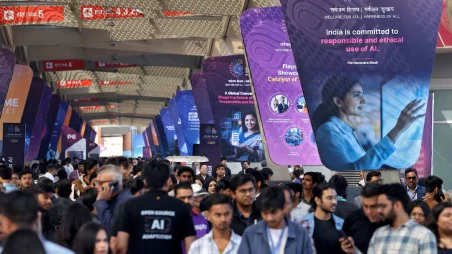

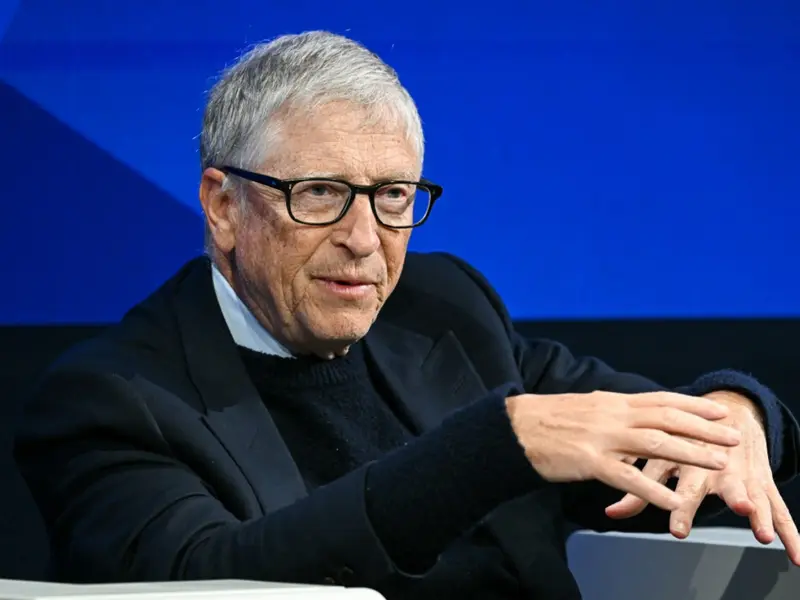
Just hours before he was due to deliver the keynote speech, Bill Gates withdrew from India’s AI Impact Summit, compounding setbacks for an event already overshadowed by logistical failures, controversy over a robotic exhibit and widespread traffic disruptions.
Despite the turbulence, the six-day gathering secured over $200 billion in AI infrastructure commitments. Among the largest pledges was a $110 billion investment plan from Reliance Industries. The Tata Group also entered into a partnership with OpenAI.
Gates’ decision followed the earlier cancellation of Jensen Huang of Nvidia, adding to challenges faced by a summit promoted as the first major AI forum in the Global South. Organisers had previously denied speculation about Gates’ absence, saying he was expected to attend. His withdrawal came weeks after the U.S. Department of Justice released emails referencing communication between the late financier Jeffrey Epstein and staff at the Gates Foundation. Gates has maintained their interactions were limited to philanthropic matters and described meeting Epstein as an error.
Addressing the summit, Indian Prime Minister Narendra Modi urged stronger safeguards for children using AI technologies. He shared the stage with French President Emmanuel Macron, Sundar Pichai, Sam Altman and Dario Amodei.
The leaders gathered to mark the launch of the New Delhi Frontier AI Commitments, a voluntary framework aimed at promoting responsible and inclusive development of advanced AI systems.
An awkward moment unfolded during a symbolic unity photo when Altman and Amodei heads of rival firms OpenAI and Anthropic stood beside each other without linking hands, unlike other participants.
While investment announcements signaled strong financial backing, the summit drew criticism over management issues. Exhibition halls were unexpectedly closed to the public, angering companies that had mounted displays. One university, Galgotias University, was asked to remove its booth after presenting a Chinese-made robotic dog as its own invention, prompting backlash.
Security arrangements for VIP movements led to repeated road closures across New Delhi, a city of about 20 million residents, causing significant gridlock. The government apologised for the disruption, but social media footage showed participants trekking long distances due to a lack of transport options.
Opposition figures, including Congress spokesperson Pawan Khera, criticised the handling of the event, arguing that poor organisation undermined the very innovators it sought to support.