

Nigeria’s drive for fuel self-sufficiency has received a major boost following an offtake deal between the Dangote Petroleum Refinery and 12 leading fuel marketers to supply up to 65 million litres of petrol nationwide each day.
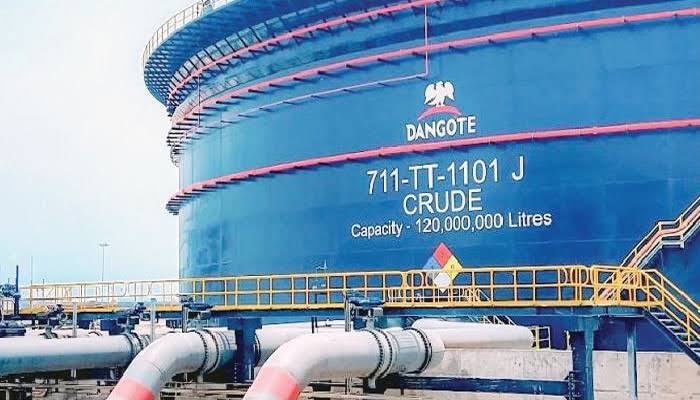
In Lagos, Africa’s richest businessman, Aliko Dangote, unveiled a landmark supply arrangement aimed at ensuring steady nationwide access to Premium Motor Spirit (PMS) while opening the door for exports of surplus volumes.
The agreement commits the Dangote Petroleum Refinery to channel as much as 65 million litres of petrol each day into Nigeria’s domestic market. Any output projected between 15 and 20 million litres above local requirements will be shipped to external markets. Dangote confirmed that the structure is designed to prioritise local consumption before surplus distribution abroad.
With Nigeria’s daily petrol demand estimated between 50 million and 60 million litres, the framework is expected to more than satisfy internal consumption and create additional export capacity. On a monthly scale, projected supply could range from 1.8 billion to 2 billion litres, depending on production levels.
The coordinated distribution strategy builds on an earlier understanding reached in October 2025 between the refinery and downstream operators, an effort intended to reduce supply instability and curb fluctuations in pump prices. Prior disclosures from independent marketers had suggested that up to 600 million litres per month would initially be allocated to the domestic market.
Institutional support for the arrangement has been provided by the Nigerian Midstream and Downstream Petroleum Regulatory Authority, which endorsed the model as part of ongoing reforms targeting product hoarding and speculative trading practices.
Fuel distribution nationwide will be executed by a coalition of major operators, including MRS Oil Nigeria Plc, Nigerian National Petroleum Company Limited Retail, 11 Plc, TotalEnergies Marketing Nigeria, Rainoil Limited, Northwest Petroleum & Gas Company Limited, Ardova Plc, Bovas & Company Limited, AA Rano Nigeria Limited, AYM Shafa Limited, Conoil Plc, and Masters Energy.
According to refinery officials, the coordinated framework seeks to streamline logistics, discourage stockpiling, and promote price consistency within Nigeria’s complex downstream sector.
Market observers argue that the initiative could significantly relieve chronic supply strains in Africa’s leading oil producer, which has long depended on imported refined fuels. That reliance has historically left the economy vulnerable to foreign exchange instability, international supply disruptions, and recurring fuel shortages.
Meanwhile, the Group Chief Executive Officer of the Nigerian National Petroleum Company Limited, Bayo Bashir Ojulari, recently characterised the refinery as a game-changing national investment. He indicated that although the plant was originally configured for 650,000 barrels per day, recent technical assessments have recorded performance levels exceeding initial operational benchmarks.
Energy sector analysts note that the supply pact aligns closely with downstream market reforms introduced under President Bola Tinubu, whose administration eliminated fuel subsidies and advanced market liberalisation policies.
Should execution proceed as planned, the offtake structure could represent a decisive shift in Nigeria’s petroleum supply landscape, strengthening domestic stability while positioning the country to export refined products across West and Central Africa.