

Zimbabwe has halted the export of all raw materials following claims of government misconduct and leakages.
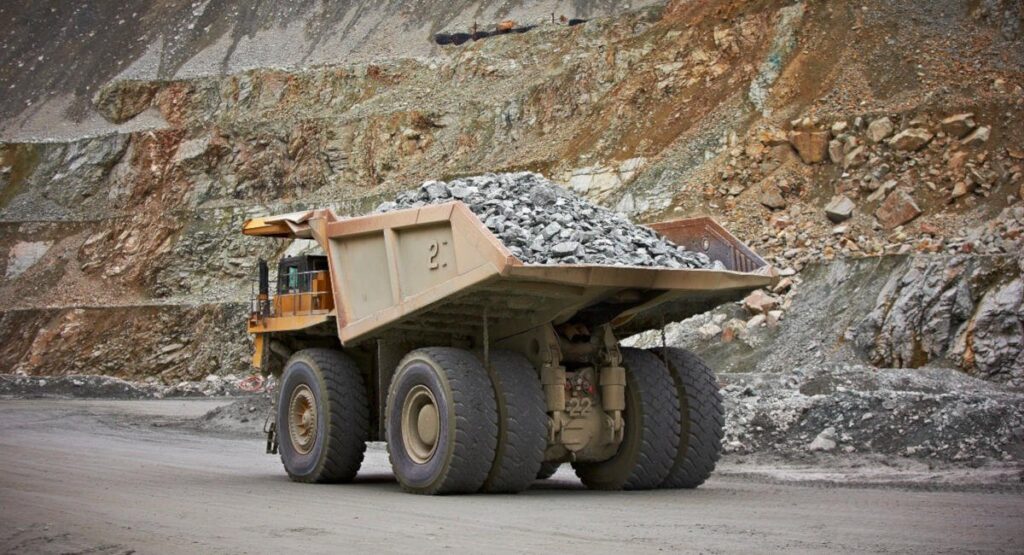
Following allegations of malpractice and resource leakages, Zimbabwe has moved to immediately suspend all exports of raw materials, the Mines Ministry announced on Wednesday in a statement seen by Reuters. The directive imposes an immediate and indefinite ban on the shipment of all minerals and lithium concentrates.
“The government expects full cooperation from the mining sector on this directive, which has been implemented in the national interest,” the statement added.
While the move may appear sudden, Zimbabwe had previously outlined plans in 2025 to prohibit the export of lithium concentrates beginning January 2027.
Mines Minister Winston Chitando explained at the time that the measure is intended to encourage local value addition within the mining industry.
“Effective January 2027, the export of lithium concentrates will no longer be permitted,” the minister told reporters in Harare.
Regarding the current export suspension, authorities reiterated, “We remain committed to in-country value addition, beneficiation, compliance, and accountability in the management of Zimbabwe’s mineral resources.”
The ministry stated that export procedures will be revised due to “ongoing irregularities in the exportation of minerals,” according to a letter sent to Zimbabwe’s Chamber of Mines, obtained by Reuters on Wednesday.
“This review forms part of a wider initiative to prevent leakages and improve operational efficiency within our systems,” the ministry noted.
Zimbabwe’s recent economic achievements
In January, the country recorded its first single-digit inflation in over 20 years, with the ZiG falling to 4.1%, down from 15% in December and 19% in November 2025.
Analysts attribute the decline to stricter monetary policies, improved supply chains, and relative stability in foreign exchange markets.
Partly backed by gold, the ZiG has remained stable in official markets, with a parallel-market premium of roughly 20%. Gold production is also expected to surpass the record 38.4 tons achieved in 2024.
Earlier in January 2026, Caledonia Mining Corporation announced plans to invest about $132 million this year to develop what is projected to become Zimbabwe’s largest gold mine. This is part of a broader $162.5 million capital plan for 2026, pending board approval and financing, according to Reuters.
Production is slated to start in late 2028, with steady annual output of around 200,000 ounces from 2029 for at least a decade.
In February, Zimbabwe, heavily reliant on its natural resources, revealed plans to launch Africa’s first lithium sulphate plant.
In 2024, the nation became the continent’s top lithium producer. During the first half of 2025, sales of lithium spodumene concentrate reached 586,197 metric tons, a 30% rise from 451,824 metric tons in the same period of 2024, despite a global price drop of 90%—from over US$80,000 per ton in 2022 to US$8,450 per ton by June 2025.
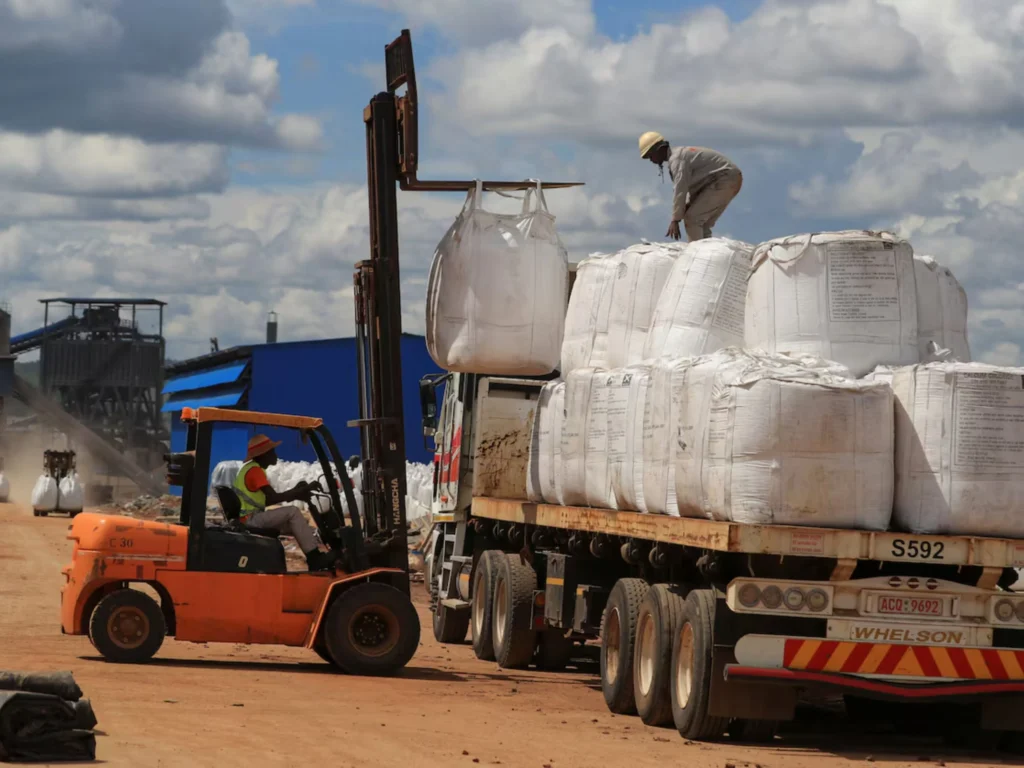
By the end of 2025, Zimbabwe exported 1.128 million metric tons of lithium-bearing spodumene concentrate. Production is projected to reach 160,000 tonnes of lithium carbonate equivalent by 2030, outpacing other regional producers.