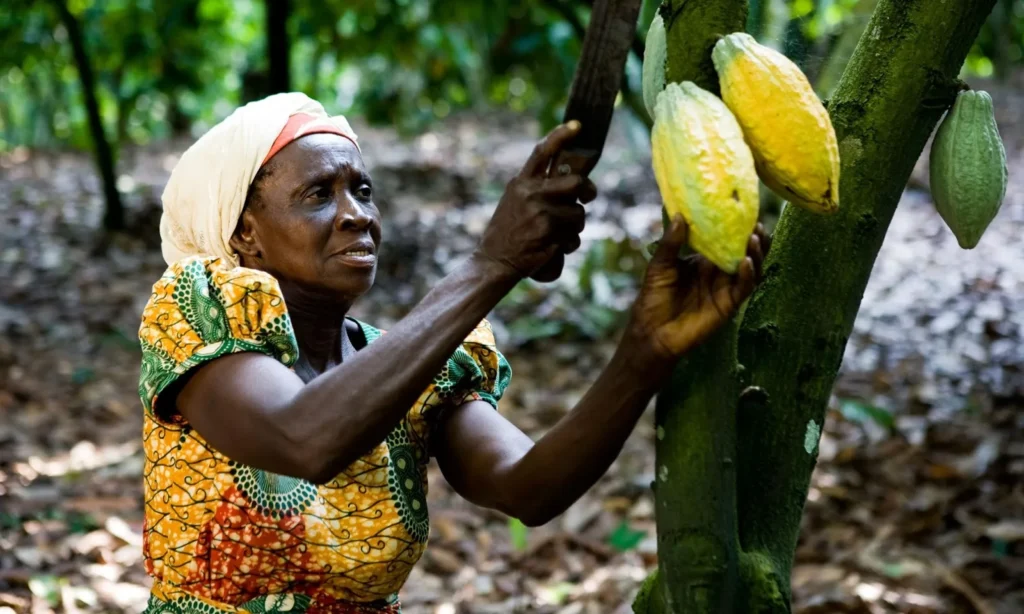
There is a quietly harsh reality in watching food go to waste.
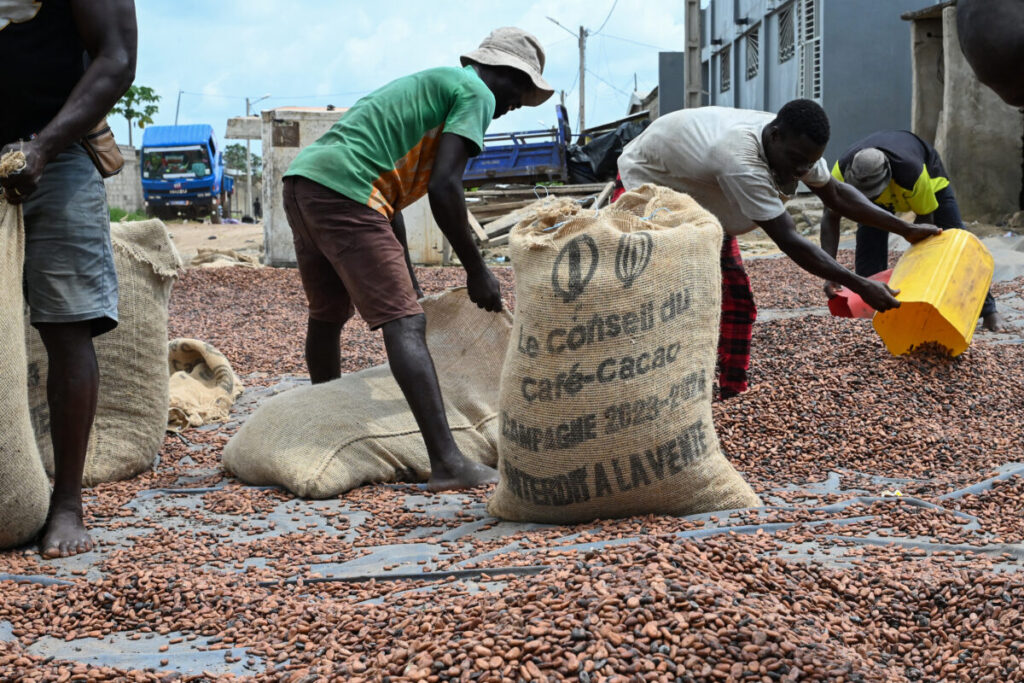
For cocoa farmers across parts of Ghana and Ivory Coast, that reality has become tangible in recent months. Beans they harvested have often remained unsold, with buyers either unwilling or unable to pay prices that make the labour worthwhile.
This represents a striking reversal for a crop that not long ago seemed to be enjoying unprecedented prosperity.
Global cocoa prices soared to record highs last year, briefly exceeding $10,000 per tonne. The spike made headlines and brought hope to West African farming communities.
Supply concerns and disappointing harvests drove the surge, creating a brief moment in which it seemed the world’s chocolate growers might finally receive adequate compensation for their work.
However, the market soon cooled, and so did the optimism. Prices have since fallen sharply, and reporting by the Associated Press suggests that some farmers now struggle to find any buyers at all.
What had appeared as an opportunity has become, for many, another lesson in the enduring frustration of commodity agriculture: the farmers who cultivate the crops rarely control the prices or the profits.
A system controlled from above
Together, Ghana and Ivory Coast produce roughly two-thirds of global cocoa, yet the farmers at the centre of this supply chain wield surprisingly little influence.
Each season, official farmgate prices are set by the governments to provide some measure of stability in a notoriously volatile market. While this is intended to shield farmers from severe fluctuations, the system also limits their ability to benefit when global prices rise. When market conditions worsen, the price floors offer only modest protection.
As a result, millions of cocoa-farming families remain vulnerable to global market swings beyond their control, capturing only a small portion of the value generated by their labour. Despite the chocolate industry being worth tens of billions annually, the farmers at its foundation see very little of that wealth.
Searching for alternatives
In some regions, the economics no longer add up, and farmers are making difficult decisions.
A number are turning to other crops, while some, especially in Ghana, have increasingly engaged in small-scale gold mining, an alternative that has gained attention in recent years as cocoa’s financial returns have dwindled. While this trend is concerning for the industry, it is understandable from the perspective of those seeking stable income.
Underlying the trend are deeper challenges. Cocoa farms in West Africa are aging, trees are afflicted by disease, and shifting weather patterns disrupt harvests in unpredictable ways. Younger generations, who might inherit the farms, are becoming hesitant: the work is physically demanding, income is uncertain, and financial rewards often bypass the growers themselves.
Broader implications
Ghana and Ivory Coast have recently worked together to strengthen their position in the global market, advocating for mechanisms that could deliver higher prices to farmers and improve their bargaining power with international buyers. These efforts acknowledge that the status quo is unsustainable.
Still, the current situation demonstrates how far there is to go. Cocoa beans left unsold or spoiling in villages illustrate the stark contradictions of the global chocolate economy: while demand for chocolate has never been higher, the people who make it possible tending trees, harvesting pods, and drying beans under the West African sun remain deeply exposed to forces they cannot control.
Although not a new problem, it has become increasingly difficult to overlook.
Cocoa cultivation supports approximately six million farming households across West Africa, along with tens of millions more working in related parts of the supply chain.