

Ghana intends to phase out imports of liquefied petroleum gas (LPG) cylinders in a bid to strengthen local manufacturing and improve access to cleaner cooking fuels.
In Parliament, John Abdulai Jinapor explained that, under the new policy, LPG distributors would be required to purchase cylinders from domestic producers rather than relying on foreign imports.
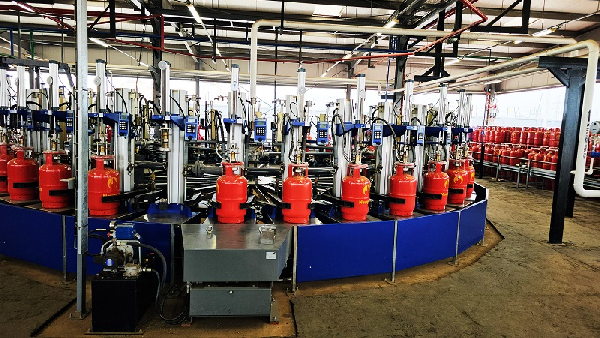
Reviving the state-owned Ghana Cylinder Manufacturing Company Limited forms a central part of this initiative. The firm has struggled financially for years, despite playing a strategic role in the country’s gas sector.
Estimates indicate the company needs around $8 million to complete a full overhaul, and about $6 million has already been secured, according to Jinapor. The government is working with the National Petroleum Authority and Ghana National Gas Company to modernize the plant and increase its output.
Production at GCMC has already seen early improvements, doubling in 2025 compared with last year. “We are on course to revamp Ghana Cylinder, and we are on course to retool it,” the minister stated.
To support the reforms, authorities have recalled old and obsolete cylinders, which will either be refurbished or replaced with locally manufactured units. A distribution agreement with GOIL PLC will see the state-owned oil marketer handle cylinders under Ghana’s Cylinder Recirculation Programme.
The policy also supports the government’s broader goal of reducing reliance on firewood and charcoal. LPG currently serves as the main cooking fuel for roughly 40 percent of households, and the target is to reach 50 percent penetration by 2030 to improve air quality and preserve forest reserves.
Financial struggles have long affected GCMC. An Audit Service report recorded a loss of about GH¢4 million in 2021. In 2023, the Ghana National Gas Company acquired the plant to prevent its collapse and restore operations.
During parliamentary discussions, Charles Asiedu urged additional government funding and promoted private sector partnerships with LPG marketers to expand the market for locally produced cylinders. He also highlighted the potential to export cylinders under the African Continental Free Trade Area to meet rising demand in neighbouring countries.
Plans are also underway to strengthen Ghana’s LPG supply chain. GOIL PLC intends to invest approximately $50 million to enhance storage and distribution infrastructure for the growing market.
Officials stress that expanding LPG usage and domestic cylinder production is a key part of Ghana’s energy transition strategy, aimed at lowering emissions, reducing household energy costs, and deepening the country’s domestic gas market.