

Nigeria’s top military officials visited Maiduguri on Wednesday following one of the deadliest attacks in the Borno state capital in recent years.
The trip comes after President Bola Tinubu instructed authorities to intensify efforts against the rising wave of terrorism in the region.
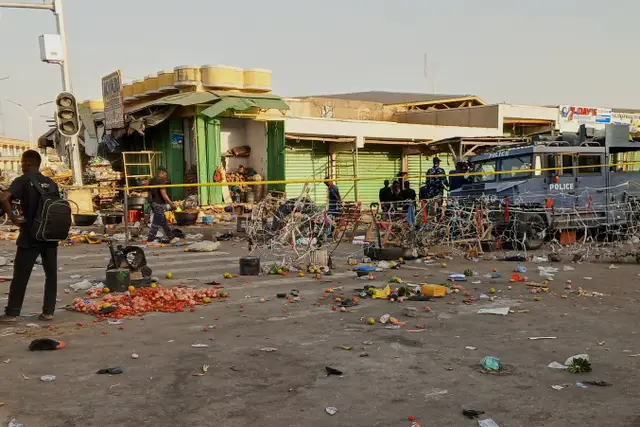
A triple suicide bombing on Monday claimed at least 23 lives and injured 108 others in the city. The military has attributed the attacks to the militant group Boko Haram.
General Olufemi Oluyede, Nigeria’s chief of defence staff, emphasised that ending terrorism requires local participation.
“The majority of individuals carrying out these horrific acts are from Borno and Yobe states. They are our family members brothers, sisters, cousins and we know them,” Oluyede said, suggesting that community complicity is a factor.
He added, “To put a stop to this, everyone must play a role. Our communities must recognise the urgency and take responsibility for ending these attacks.”
Boko Haram, along with the rival Islamic State West Africa Province (ISWAP), has intensified operations in north-eastern Nigeria.
Over the past 17 years, these jihadist groups have caused more than 40,000 deaths and displaced around two million people in their bid to establish a caliphate.
Although Oluyede promised that similar incidents would not recur, analysts note that Nigerian forces are stretched thin, simultaneously addressing separatist movements in the southeast, armed banditry in the northwest, and clashes between farmers and herders in central regions.
The recent Maiduguri bombing follows a December mosque attack, both reminiscent of the conflict’s peak a decade ago.
In 2015, 71 suicide bombings were documented by US-based conflict monitor ACLED, but the numbers had dropped to fewer than five annually in recent years.
In 2025, however, Borno state recorded 401 military engagements, 104 bombings, and 141 civilian attacks the highest since 2020, ACLED reported.
Jihadist strategies in rural areas are evolving, and new armed groups from the Sahel region are increasingly involved in the violence.
ISWAP has escalated assaults on military facilities, striking four bases Sunday night into Monday, according to the army.
Coordinated attacks on military posts were also reported the previous week.
In a raid overnight into Wednesday on a military position in Mallam Fatori, the army claimed to have killed more than 60 jihadists, who used armed drones a tactic that is becoming more common in Nigeria and the Sahel.
Last year’s high-profile incidents highlighted jihadist activity spreading beyond the northeast, reflecting a presence that groups have nurtured for years.
A mass abduction of schoolchildren in Niger state, allegedly carried out by a Boko Haram faction, demonstrated the long reach of these militants.
Meanwhile, President Bola Tinubu continued his official state visit to the United Kingdom on Wednesday, where discussions included security collaboration and other key issues.