

Mali’s transitional leader, Assimi Goïta, has stated that the nation’s security is “under control” after a series of coordinated assaults revealed stronger insurgent collaboration and sparked fears over regional instability.
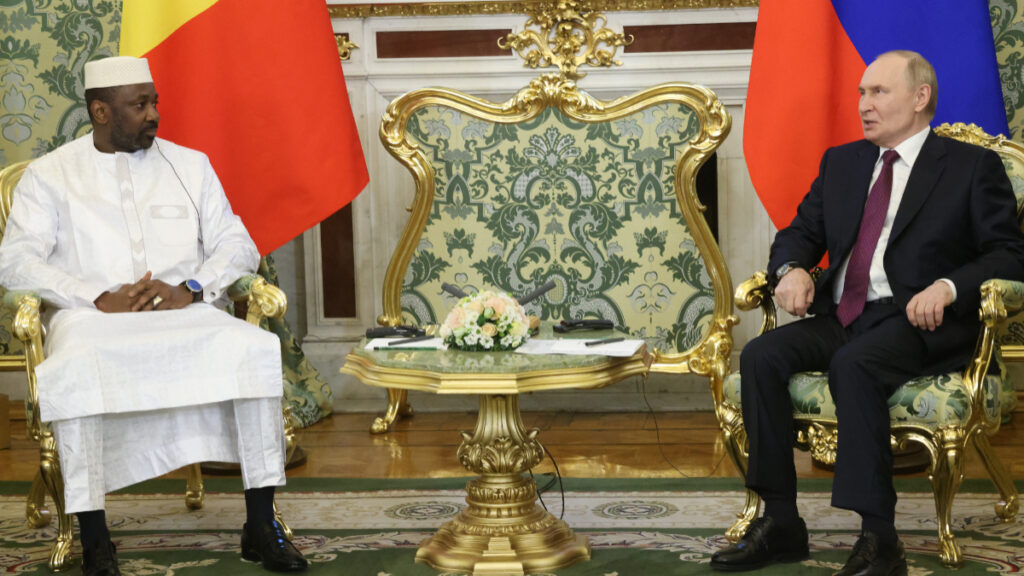
Speaking publicly for the first time since the weekend violence, Goïta addressed citizens on Tuesday, April 28, 2026, vowing to “eliminate” those behind the attacks.
Militants linked to al-Qaeda, alongside a Tuareg separatist group, carried out the operations, hitting several locations including a major military installation and zones close to Bamako’s international airport.
The clashes also resulted in the killing of Mali’s defence minister, Sadio Camara, dealing a major setback to the country’s military command structure.
Experts say the sophistication and coordination of the strikes point to a new phase, with armed factions showing greater ability to work together despite differing objectives.
This shift heightens concerns about further unrest across Mali’s expansive northern territories and neighbouring states, where militant activity has been spreading.
During a televised address, Goïta reaffirmed that military campaigns would persist until the attackers are fully defeated.
Earlier, official images showed him in talks with Russia’s envoy to Mali, Igor Gromyko, signalling closer defence cooperation between Bamako and Moscow.
Russia strengthens partnership with Mali
A government release noted that both countries reiterated their shared resolve to combat “international terrorism.”
Russia has become a central ally for Mali after the removal of French troops and United Nations forces following the coups of 2020 and 2021.
Russian authorities said their troops assisted in preventing what they described as an attempt by militants to take over vital infrastructure, including the presidential palace.
In a separate update, Russia’s defence ministry warned that insurgents were reorganising and that additional attacks could occur.
“The enemy has not abandoned its aggressive intentions,” the ministry said, noting that surveillance efforts were ongoing to dismantle militant hideouts.
At the same time, a representative of Jama’at Nusrat al-Islam wal-Muslimin (JNIM), Bina Diarra, claimed responsibility for the assaults in a video, framing them as retaliation for Malian military actions such as drone strikes. He also threatened to encircle Bamako, a city of about four million residents.
“As of today, Bamako is closed off from all sides,” Diarra said, referencing tactics like fuel blockades previously used to disrupt the capital.
Conditions on the ground remain uncertain, with separate accounts indicating that fighters associated with Islamic State in the Sahel Province have moved into the northeastern town of Ménaka near the Niger border.
Although no direct fighting was reported, locals said militants had set up checkpoints in parts of the town, underscoring the overlapping presence of armed groups.
JNIM and Islamic State-linked factions have frequently clashed, with hundreds of confrontations since 2019 and more than 2,000 fatalities recorded, according to conflict data.
Global attention is now focused on Russia’s role in the crisis, especially as it expands its security influence in Africa while continuing its war in Ukraine.
For Mali, the renewed violence highlights the ongoing difficulties confronting its military-led government as it seeks to stabilise a fragmented and volatile security environment.