

The Speaker of Parliament, Alban Bagbin, has once again urged the Executive to make land available near the State House for the creation of a permanent home for Parliament. He emphasized that the legislature’s current status as a tenant within the State House hampers its independence and operational effectiveness.
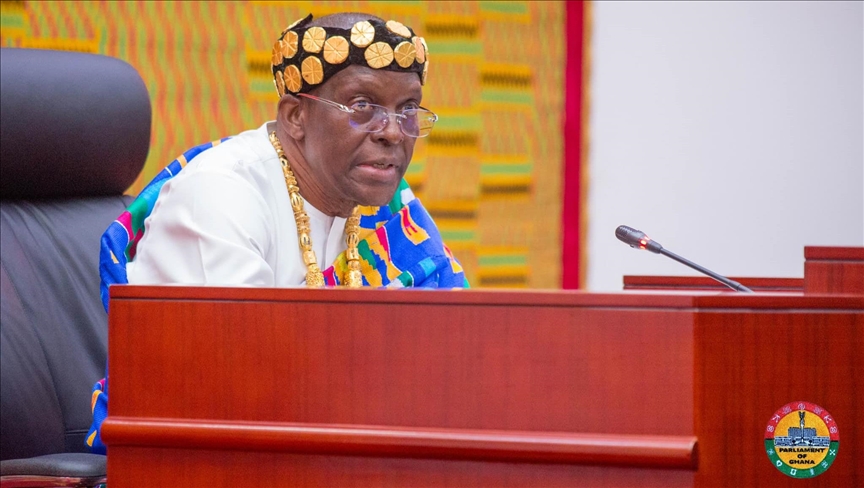
Addressing the launch of Parliament’s Corporate Strategic Plan for 2026–2030 on Thursday, February 12, Mr. Bagbin highlighted the challenges posed by the existing facilities. “We have long appealed for this support so that Parliament can operate from its own premises, free from dependence on the State House,” he said.
He described infrastructural shortcomings as a major obstacle to smooth parliamentary operations, particularly when decisions require broad consensus. “There are significant infrastructural challenges. Even decision-making becomes difficult without adequate resources,” he explained.
To enhance legislative efficiency, the Speaker disclosed that Parliament is piloting an electronic voting system. “We are introducing e-voting to streamline decision-making in the House, starting with a pilot that we expect will resolve many of the current inefficiencies,” he stated.
While noting past efforts to upgrade existing facilities, Mr. Bagbin maintained that the current setup remains insufficient. “Although we have tried to modernize and improve what is available, it is not enough. We appeal to the Executive to release land so we can establish a permanent seat for this pillar of democracy,” he said.
He also pointed out that certain amenities within the State House are not freely accessible to Parliament without payment. “Access to some structures, including the banquet hall, requires payment, which further complicates our operations,” he noted.
The Speaker stressed that a dedicated parliamentary facility would reinforce both the independence and efficiency of the legislature. He recalled that in 2019, the then-government had proposed a new parliamentary chamber, but opposition from minority lawmakers and civil society, highlighted by the #DropTheChamber protests, led to the suspension of the project.