

Production of lithium in the Democratic Republic of Congo is set to begin in June at the contested Manono deposit, as China’s Zijin Mining advances Beijing’s push to lock in critical mineral supplies across Africa.
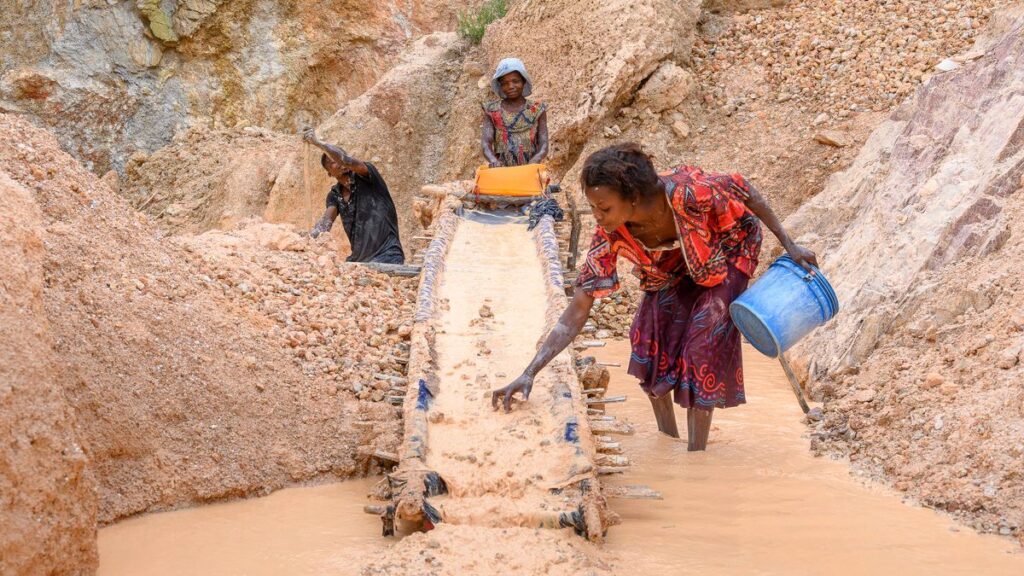
China’s Zijin Mining and Congolese state miner Cominiere have announced that initial lithium production at the contested Manono site will begin this month, with shipments expected to follow shortly after. This revised schedule brings the project forward from an earlier projection that targeted a first-quarter 2026 start.
Regarded as one of the largest undeveloped hard-rock lithium deposits globally, Manono has become a focal point in the international scramble for battery minerals used in electric vehicles and renewable energy storage systems.
Ongoing legal battle over mining rights
The project remains entangled in arbitration proceedings after the Congolese government cancelled Australian firm AVZ Minerals’ permit in 2023, citing slow progress on development. Authorities later endorsed new arrangements involving Zijin Mining and Cominiere.
AVZ has challenged the decision, arguing the permit withdrawal was unlawful, while Kinshasa insists it acted within its legal mandate.
Under the current ownership structure, Zijin controls 61% of the venture, with the remaining stake held by Cominiere and the Congolese state.
Cominiere’s Managing Director, Alpha Monga Mwidia, confirmed that the first quantities of lithium will be produced in June, with exports commencing immediately afterward. Neither Zijin nor Cominiere provided details on projected output or export volumes for the first year.
Weak prices amid strategic expansion
The start of production comes during a turbulent period for the lithium market. Prices have dropped by roughly 86% from their peak in late 2022, weighed down by Chinese stockpiles, rising domestic supply, and slower growth in electric vehicle demand.
Even so, Beijing continues to consolidate its presence in Africa’s resource sector, particularly in the lithium- and copper-rich regions of the DRC.
According to the joint venture terms, all lithium produced in the initial phase including Cominiere’s share will be marketed and sold by Zijin. While Cominiere did not finance the nearly $1 billion development cost, it will earn revenue proportional to its equity holding.
Geopolitical rivalry intensifies
Beyond commercial considerations, Manono underscores intensifying competition between global powers for access to Africa’s battery minerals.
Washington has attempted to steer Congolese mineral exports toward Western markets through short-term supply agreements, seeking to counter China’s long-established dominance in the region’s mining industry.
At the same time, U.S.-supported KoBold Metals, which holds exploration licences on the opposite side of the Manono deposit, has indicated it will postpone construction plans until ownership disputes are conclusively settled.