

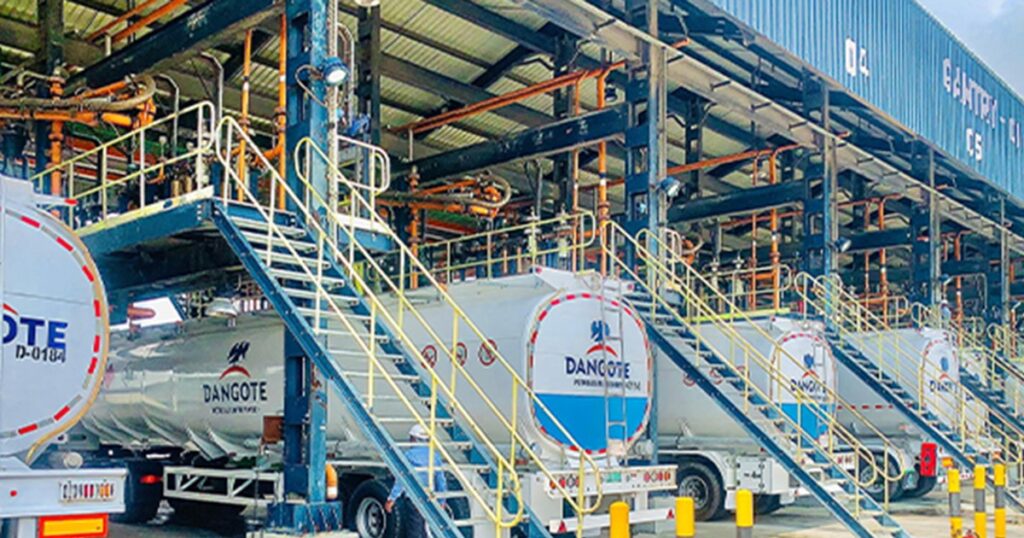
Uncertainty has arisen regarding crude allocations to the Dangote Petroleum Refinery, with refinery officials stating they have not received confirmation of any additional cargoes reportedly approved by the Nigerian National Petroleum Company Limited.
Earlier reports suggested that NNPC had increased the refinery’s crude supply for May from five to seven cargoes, in an effort to boost domestic fuel production.
However, senior personnel at the facility told The PUNCH that they had not been formally notified of such an increase, despite ongoing discussions with the state-owned oil company.
This situation highlights a communication gap between Nigeria’s largest refining project and its main domestic crude supplier, occurring as the country works to stabilize fuel output and reduce dependence on imports.
Two trading sources had indicated that seven cargoes might be delivered to the refinery in May, up from the previous five-month allocation.
Nonetheless, Dangote officials emphasized that no official confirmation of the increased allocation had been received.
Supply Uncertainty and Production Expectations
Africa’s largest refinery, with a capacity of 650,000 barrels per day, is central to Nigeria’s ambitions of achieving fuel self-sufficiency and becoming a net exporter of refined petroleum products.
Any ambiguity over crude deliveries could influence production targets and market expectations.
Refinery sources stated that the facility is likely to receive six cargoes in May, contradicting reports of seven, with the total May allocation estimated at approximately 6.15 million barrels. Each cargo represents roughly one million barrels, while Nigeria’s monthly requirement stands at 19.77 million barrels.
Previous shipments included 4.55 million barrels in October, 6.45 million in November, 4.30 million in December, 5.65 million in January, 4.66 million in February, and around six million barrels in March.
Negotiations between Dangote Refinery and NNPC are ongoing, suggesting that supply arrangements are still being finalized. The outcome will be closely monitored by industry stakeholders, particularly as demand for locally refined fuel rises across Nigeria and neighboring countries.
The clarification comes amid the refinery’s growing prominence as a global supplier of refined fuel, especially during the Middle East crisis, which has disrupted international supply chains.
In addition to domestic supply, Dangote Refinery has positioned itself as a key regional exporter, supplying multiple African nations seeking reliable fuel closer to home. Analysts note that this expansion reflects a broader trend toward intra-African energy trade, as countries increasingly seek regional solutions to counter global supply uncertainties.