

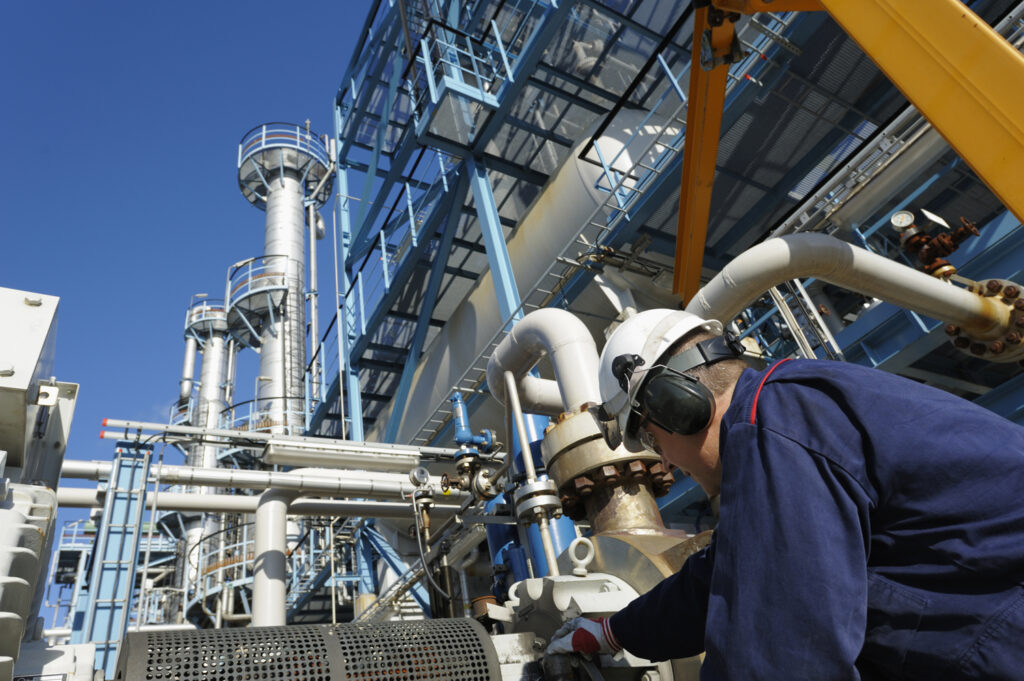
Egypt is committing $4 billion to upgrade and expand its oil refining industry, aiming to improve energy security, increase domestic economic benefits, and reduce reliance on imported fuel. Karim Badawi, Minister of Petroleum and Mineral Resources, stated that the initiative includes six refinery modernization projects intended to boost national refining capacity and operational efficiency.
Badawi made the announcement during a meeting with Ethiopis Tafara and Cheick‑Oumar Sylla of the International Finance Corporation (IFC). The discussions focused on investment and financing opportunities in refining, petrochemicals, and mining, as well as strategies to increase private-sector involvement in Egypt’s downstream industries.
Currently, Egypt’s refining infrastructure includes roughly 840,000 barrels per day (bpd) of installed capacity across about a dozen plants, most managed by the Egyptian General Petroleum Corporation (EGPC). The Mostorod and MIDOR refineries are the largest, each processing around 160,000 bpd. However, aging equipment and maintenance challenges have limited actual output to approximately 600,000 bpd, leaving the country reliant on fuel imports, according to the U.S. Department of Commerce.
The six planned projects are intended to reverse this trend by upgrading machinery, increasing yields of high-value products such as diesel and gasoline, and removing production bottlenecks.
Egypt’s oil and gas sector continues to play a central role in the country’s broader economic reform program, implemented in partnership with the International Monetary Fund. Initiatives such as fuel-price liberalization and subsidy reductions have opened space for private investment while easing the fiscal load on the government.
“The new projects will strengthen national refining capacity, raise regional value creation, and cut fuel import costs,” Badawi said. The ministry is also revising payment arrangements with exploration and production partners and encouraging local operators to increase output to ensure a stable supply for the upgraded facilities.
Regional significance
With industrial expansion and growing transportation demand, domestic fuel consumption in Egypt is rising. By modernizing its refineries, the government aims to meet this demand internally while positioning Egypt as an energy hub for North Africa and the eastern Mediterranean.
Collaboration with the IFC highlights Cairo’s efforts to attract international investment and technical expertise to the energy sector. Officials emphasized support for projects that enhance environmental sustainability and energy efficiency, aligning industrial growth with Egypt’s climate transition goals.
This $4 billion initiative complements recent upstream and midstream achievements, including new natural gas discoveries and expansions at the Zohr gas field. Together, these measures underscore the government’s commitment to transforming the energy sector into a driver of sustainable economic recovery, domestic supply security, and export growth.