

Efforts to strengthen industrial capacity and climb the value chain paid off for Ghana in 2025, as non-traditional exports recorded a standout performance, largely fuelled by robust growth in cocoa processing and other value-added products.
This gradual move away from reliance on raw materials is transforming the country’s trade composition and enhancing its competitiveness in both regional and global markets.
Data released by the Ghana Export Promotion Authority (GEPA) shows that the top ten non-traditional export products generated about $3.28 billion in 2025, up from roughly $1.59 billion in 2024 representing a 53% increase. These products made up 65.48% of total non-traditional export revenues, with each top-tier product averaging about $242 million.
GEPA described the outcome as clear evidence of a structural transition in Ghana’s export model, shifting from raw commodities to processed and semi-processed goods.
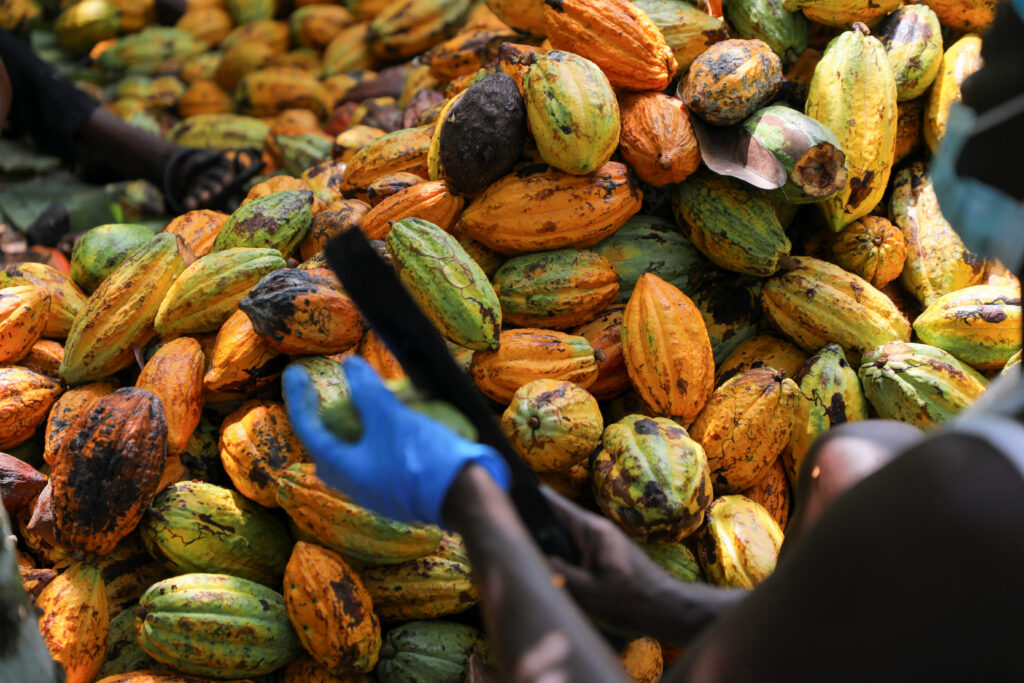
A major driver of this transformation is cocoa processing, which remains central to Ghana’s export earnings while increasingly supporting a broader industrial ecosystem.
Cocoa paste led as the highest-earning export, bringing in $789.3 million in 2025. This marks a 70.97% year-on-year increase and highlights Ghana’s growing focus on processing cocoa locally rather than exporting it in raw form.
Other cocoa-based products saw even stronger growth, supported by demand from European and industrial markets. Cocoa butter exports surged to about $469 million after a 120.18% rise, while cocoa powder reached approximately $173 million, reflecting a 112.97% increase. Overall, the cocoa sector generated around $3.69 billion, which GEPA described as a “historic milestone” for value-added exports.
Outside cocoa, diversification within agriculture continued to support export growth. Cashew nuts brought in about $219 million, while the shea sector also performed strongly, with shea nuts earning roughly $131 million and shea oil about $129 million, driven by rising demand from the cosmetics and pharmaceutical industries.
Manufacturing and fisheries also played a key role in boosting export figures. Plastic products generated around $203 million, aluminium exports reached about $121 million, and canned tuna climbed to roughly $157 million. Altogether, processed and semi-processed goods accounted for more than 83% of export earnings, reinforcing the country’s shift toward industrial production.
Despite the overall strong performance, some sectors faced challenges. Iron and steel exports dipped slightly to about $233 million, affected by fluctuating global prices and increasing competition on the international stage.
GEPA linked this decline to external market pressures, even as the broader export outlook remained positive.
Europe continued to dominate as Ghana’s main export destination, with countries such as the Netherlands, the United Kingdom, and France serving as key markets.
Meanwhile, trade within Africa kept expanding, supported by demand across the Economic Community of West African States. Regional exports now account for 30.36% of Ghana’s non-traditional export earnings.
GEPA Chief Executive Francis Kojo Kwarteng Arthur noted that the results highlight Ghana’s rising competitiveness in regional trade, pointing to initiatives like the Accelerated Export Development Programme as critical to improving production capacity and quality standards.
The figures were presented at the launch of the 2025 Non-Traditional Export Statistics Report on April 17, 2026, showcasing Ghana’s deepening integration into the African Continental Free Trade Area framework.
Overall, the 2025 export performance signals a growing shift toward industrialisation and value addition, positioning Ghana as an emerging hub for manufacturing and processing within West Africa.