

In an effort to close persistent gaps in Africa’s climate data, Israel has introduced what is considered the world’s first mobile climate laboratory in Kenya, aiming to strengthen environmental decision-making across the region.
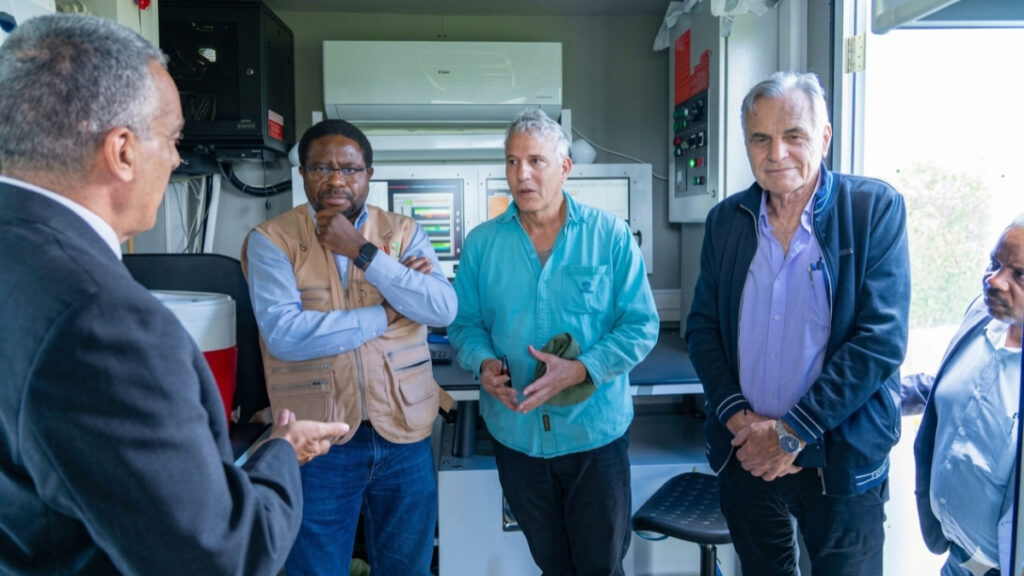
The unit, now based in Machakos County after operating for two months, is located at the International Livestock Research Institute facility in Kapiti. It is managed by the Weizmann Institute of Science, a prominent scientific research body.
During a visit, Israel’s Ambassador to Kenya, Gideon Behar, explained that the project seeks to address the ongoing lack of dependable, ground-level climate data across Africa, which has limited effective policymaking.
He noted that the continent faces a significant shortfall in climate information, adding that the laboratory’s work is intended to bridge that divide and support more informed, science-based decisions by governments and researchers.
The mobile lab is fitted with over 30 instruments designed to track factors such as carbon exchange, solar radiation, water usage, and vegetation changes. Experts say this kind of detailed data is still limited in many parts of Africa, where climate modelling often depends heavily on satellite data with little field verification.
Researchers highlight that the lab’s ability to move between locations is crucial, as it enables data collection across different ecosystems. This is expected to refine global climate models and improve insights into regional climate behaviour.
One of the lead scientists, Eyal Rotenberg, pointed out that many current models are not well calibrated due to insufficient field measurements, noting that the project will help validate and enhance these systems.
The initiative comes at a time when global attention is focused on the imbalance in climate data collection, with Africa identified as one of the least monitored regions despite facing significant climate risks.
Appolinaire Djikeng, Director General of ILRI, said the facility would enable more accurate, data-driven responses to environmental challenges, particularly in agriculture and food production.
He stressed that reliable data is essential for decision-making, especially under increasing climate pressure, adding that the lab will provide critical evidence to support sustainable practices.
The Kapiti site has long been used for research into livestock health, nutrition, and genetics. The introduction of the mobile lab is expected to expand studies on how climate variability affects rangelands, biodiversity, and agricultural output.
The project is expected to run for a minimum of three years, with plans to relocate the lab to other areas, including Mount Kenya, before extending operations to countries like Tanzania and South Africa.
Scientists involved in the initiative believe it could contribute to building a comprehensive, continent-wide climate dataset, potentially paving the way for expanded research infrastructure across Africa.
Although the project highlights increasing global cooperation in climate science, experts emphasise that long-term success will depend on continued investment and strengthening local expertise.