

A.P. Moller–Maersk, one of the world’s largest container shipping companies, has temporarily stopped accepting new bookings to and from Somaliland’s Port of Berbera, a move that is disrupting a rapidly expanding trade route connecting the Horn of Africa’s coastal ports to Ethiopia’s import-dependent economy.
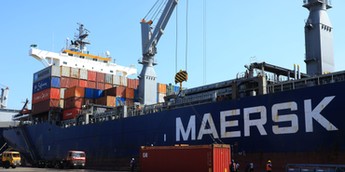
In a notice to customers, the company said the suspension takes effect immediately and is linked to changes in its scheduling arrangements.
Maersk, however, clarified that shipments already in transit will proceed to their destinations as planned.
The shipping firm also noted that customers had been using the Berbera service both for local cargo movement and for links into neighbouring markets, including Ethiopia.
While operations at Berbera are on hold, Maersk assured clients that its other regional routes remain operational. Services to Djibouti, Mogadishu, and Mombasa will continue to run, providing alternative connectivity options across East Africa.
Pressure builds on Horn of Africa trade route
Berbera has gained strategic importance in recent years as Ethiopia works to reduce its heavy reliance on Djibouti for access to global markets.
The corridor has handled a mix of imports such as fuel, consumer goods, and construction materials, while also supporting exports like livestock, easing pressure on traditional trade bottlenecks in the region.
The suspension is expected to strain Ethiopia’s supply chains in the short term, with possible outcomes including higher shipping costs, longer delivery times, and a likely shift of cargo back toward Djibouti and Mombasa, both already handling substantial volumes.
Somaliland could also feel the impact through reduced activity at Berbera port, slowing its ambitions to position itself as a major regional logistics hub.
Maersk maintained that its wider East African network remains unaffected, with continued operations through Djibouti, Mogadishu, and Mombasa. In principle, other major shipping lines such as MSC and CMA CGM may help absorb some of the diverted cargo flows.
However, capacity constraints remain a challenge. Djibouti is already a heavily used and congested gateway for Ethiopian trade, while limited inland transport and clearance infrastructure make it difficult for other routes to scale quickly.
The disruption comes at a time of continued volatility in the Red Sea and Gulf of Aden shipping corridors, where global carriers are frequently adjusting schedules and port calls, leaving regional logistics networks increasingly vulnerable to even short-term changes.