
Growing geopolitical tensions tied to the standoff between the United States and Iran could lead Gulf nations to reconsider their international investment commitments. This includes substantial funding promises made to African economies that have increasingly depended on capital from the region.
Authorities in the Gulf are quietly evaluating whether the financial impact of a prolonged regional conflict might require adjustments to foreign investment strategies and development pledges. The Financial Times reported, citing a senior Gulf official familiar with the discussions, that policymakers are weighing the potential economic consequences.
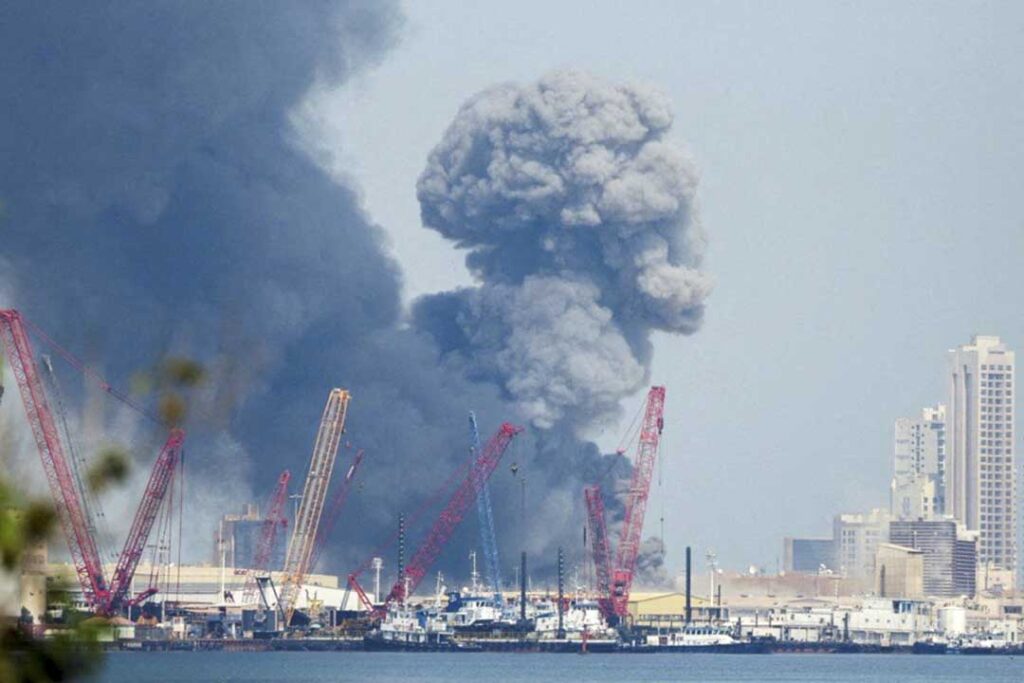
These worries arise as the confrontation involving the United States, its allies, and Iran intensifies, increasing security concerns across parts of the Middle East. The situation has raised fears that key infrastructure and vital economic assets could face disruption.
Uncertainty has already begun to spread across Gulf countries as Iran targets military installations and strategic facilities. These actions have heightened anxiety that the conflict could spill over and affect civilian and commercial areas.
Many Gulf economies depend heavily on sectors such as energy exports, logistics hubs, and tourism. Continued instability could place significant strain on these industries if tensions remain elevated.
Experts suggest that if the crisis deepens, Gulf governments might reconsider certain overseas investment commitments while focusing more on maintaining domestic economic stability and increasing security spending.
Any reduction in overseas funding could have serious consequences for African economies. In recent years, the continent has benefited from a steady increase in investment flows from Gulf countries.
If these commitments slow down or are reviewed, billions of dollars in pledged or potential financing could be affected. Projects related to infrastructure, energy development, and technology expansion across Africa could be particularly vulnerable.
Gulf investment footprint in Africa
Over the last ten years, members of the Gulf Cooperation Council, especially the United Arab Emirates, Saudi Arabia, Qatar and Kuwait, have emerged as some of Africa’s most important investment partners.
Funding from these Gulf nations has supported projects in sectors such as energy, logistics, infrastructure, mining, ports, and technology. This capital has helped finance large-scale development initiatives in several African countries.
Together, GCC states have channelled more than $100 billion into African economies during the past decade, making the region one of the continent’s fastest-growing sources of foreign investment.
Among them, the United Arab Emirates accounts for the largest share, with roughly $59.4 billion invested across Africa. Saudi Arabia follows with about $25.6 billion, while Qatar has contributed approximately $7.2 billion.
Qatar’s expanding commitments
In 2025, Qatar announced plans to invest about $103 billion across African markets over the coming years, placing it alongside the United Arab Emirates and Saudi Arabia among the continent’s major financial backers.
Several countries in sub-Saharan Africa are expected to benefit from deals signed with Al-Mansour Holdings, a conglomerate linked to Qatar’s ruling Al-Thani family.
One of the largest pledges involves the Democratic Republic of Congo, a major producer of minerals essential for the global energy transition, which has been promised investments worth $21 billion.
Likewise, Mozambique is expected to receive around $20 billion, largely connected to expanding its liquefied natural gas sector as the country prepares to join Qatar as a significant LNG exporter.
UAE renewable energy projects
The United Arab Emirates has also taken on a leading role in financing renewable energy initiatives across the African continent.
Through its Africa Green Investment Initiative, the UAE has mobilised around $4.5 billion to support clean energy projects. These investments back more than 60 initiatives covering solar, wind, geothermal power, battery storage, and green hydrogen production.
In addition, the UAE recently pledged $500 million in humanitarian aid to Sudan during a donor conference hosted by the United States in February 2026.
The country has also introduced a $1 billion “AI for Development” programme, unveiled during the G20 Summit 2025. The initiative aims to strengthen digital infrastructure and technology development across emerging markets, including Africa.
Saudi Arabia expands Africa strategy
At the same time, Saudi Arabia has been intensifying its economic partnerships with African nations.
In February 2026, the kingdom revealed plans to expand its investment in Africa to more than $25 billion by 2030, as part of a broader strategy to deepen economic cooperation with the continent.
This initiative includes funding for digital infrastructure and the development of artificial intelligence capabilities in African markets.
Saudi Arabia is also considering a subsea digital connectivity project linking African countries to its western coastline, which would enhance data connections and support the growth of Africa’s digital economy.
Risks if Gulf investment slows
Despite these ambitious commitments, many of the projects remain in early stages. Analysts warn that rising geopolitical tensions in the Middle East could influence Gulf countries’ foreign investment strategies.
A prolonged confrontation between the United States and Iran may increase financial pressure on Gulf governments due to higher defence expenditures, fluctuations in oil markets, and broader economic uncertainty in the region.
Should these pressures grow, overseas investments including those directed toward Africa might face delays or more careful review.
Several sub-Saharan African countries, including oil producers like Nigeria, still depend heavily on imported refined fuels. This dependence leaves them vulnerable to energy price shocks and disruptions to major shipping routes such as the Strait of Hormuz.
At the same time, large numbers of African migrant workers are employed across Gulf economies, meaning remittances remain another crucial economic link connecting the two regions.