

Kenya’s tea sector is facing heightened uncertainty as the ongoing conflict in the Middle East threatens critical export routes and a market that purchased $32.8 million (KSh4.26 billion) worth of Kenyan tea in 2024.
For many years, Kenyan tea has enjoyed robust demand in Gulf countries, securing a reliable share of the nation’s agricultural exports. However, recent geopolitical tensions are placing strain on these trade relationships.
In Nairobi on Monday, Iran’s Ambassador to Kenya, Ali Gholampour, cautioned that the crisis poses serious economic risks. He emphasized that Iran’s position as a major oil producer means the conflict could have wide-reaching global effects.
The flare-up, sparked by US-Israeli strikes within Iran that resulted in the death of Supreme Leader Ayatollah Ali Khamenei, triggered military and diplomatic reactions throughout the region. Authorities issued alerts to commercial shipping operators, and certain sections of regional airspace were temporarily closed.
These restrictions have disrupted cargo flights and shipping schedules across Iran, Iraq, and parts of the Gulf, creating immediate obstacles for exporters of perishable commodities such as tea and coffee. While some transport routes remain technically accessible, many airlines and freight services have suspended operations due to safety concerns and increased insurance costs.
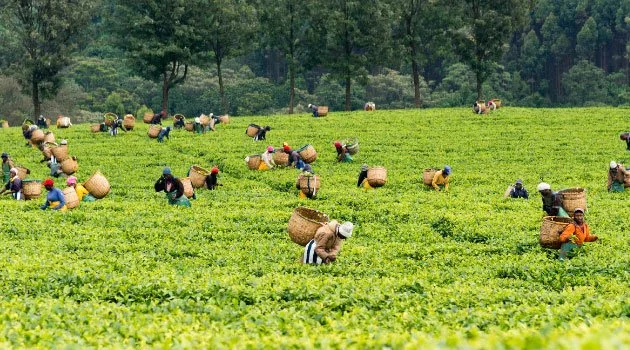
Tea, Kenya’s leading agricultural export, is particularly exposed. According to the Tea Board of Kenya, approximately 13 million kilograms of tea were shipped to Iran in 2024, valued at $32.8 million (KSh4.26 billion). Coffee, tea, and spices collectively accounted for more than 90 percent of Kenya’s exports to Tehran.
United Nations COMTRADE data shows that Kenya’s total exports to Iran reached roughly $50.8 million in 2024, with coffee, tea, and spices contributing $45.23 million. The Tea Board highlighted Iran as one of the top ten importers of Kenyan tea, reinforcing its role as a significant secondary market.
The Kenya National Bureau of Statistics reported that Pakistan remained the leading destination for Kenyan tea, taking 34.7 percent of total exports, while Egypt, the UK, the UAE, and Iran were other major markets. These secondary buyers help stabilize prices during periods of high domestic production.
Logistical challenges have intensified due to the conflict. The Strait of Hormuz, a critical maritime corridor handling roughly 20 percent of global oil shipments, has faced increased security risks. Airlines are rerouting flights, and war-risk coverage for vessels in the Gulf has been suspended by marine insurers. The immediate effects include longer delivery times, higher freight rates, and rising insurance costs.
These added expenses could reduce the competitiveness of Kenyan tea compared to producers from India and Sri Lanka, particularly for exporters operating on narrow margins. Delays also present quality risks and contractual challenges in markets where timely delivery is essential.
Long-term plans to expand trade with Iran are also under threat. A proposed $40 million (KSh5.6 billion) tea supply deal, aimed at diversifying markets beyond traditional buyers, now faces growing uncertainty due to regional instability.
Lee Kinyanjui, Kenya’s Trade Cabinet Secretary, warned that the joint US-Israeli strikes in February 2026 have disrupted logistics networks and financial channels that underpin trade with the Gulf and broader Middle East.
Trade between Kenya and the region has grown sharply in recent years. Imports rose from $1.32 billion (KSh196.48 billion) in 2020 to $4.14 billion (KSh616.33 billion) in 2023, before easing to $3.72 billion (KSh554.45 billion) in 2024. Over the same period, exports nearly tripled, increasing from $401 million (KSh59.46 billion) to $1.12 billion (KSh164.65 billion).
Financial transactions are also becoming more complicated. Sanctions and stricter monitoring of payments involving Iran have made settling trade invoices more challenging. Exporters may experience delays in receiving payments or may need to use costly intermediary banking services.
On the demand side, Iran’s economic pressures and currency fluctuations could limit its ability to import Kenyan goods, creating additional risks for exporters.
Trade CS Kinyanjui noted that the government is actively monitoring the situation and considering contingency measures, but replacing a top-ten tea buyer in a highly competitive global market remains a significant challenge.