

Rising instability in global energy markets, largely linked to the Israel–Iran conflict, is set to boost Nigeria’s oil earnings, with BMI projecting an extra ₦6.8 trillion in revenue by 2026.
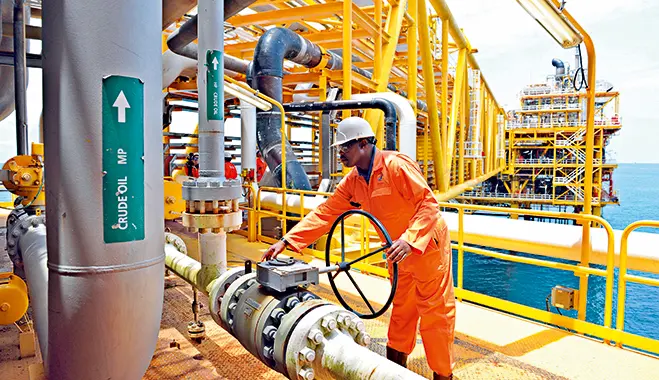
According to BMI, a research arm of Fitch Solutions, the expected gain is tied to crude oil prices climbing to an average of about $78 per barrel, compared to roughly $67 before tensions escalated.
The analysis indicates that this increase could add close to 1% to Nigeria’s gross domestic product, providing a meaningful lift to government revenues amid ongoing economic strain.
BMI also adjusted Nigeria’s 2026 growth outlook upward in its latest Sub-Saharan Africa report, pointing to stronger contributions from the oil sector.
Economic projections for Nigeria have shifted in response to developments in the Middle East crisis.
Before the recent rise in oil prices, the country’s GDP growth was estimated at 4.3%, but that figure has now been slightly increased to 4.4%.
Although government earnings have improved due to higher oil prices, ordinary Nigerians are facing increased costs.
The Middle East conflict has driven up the price of various goods, and since it began, petrol prices within Nigeria have jumped by about 40% to 50%, meaning citizens may not immediately feel the benefits of increased national revenue.
The report suggests that the inflationary pressure caused by rising oil prices is expected to be short-lived. It also commended the relative strength of the naira for helping to cushion the impact on prices.
It further noted that Nigeria has been less affected by the Middle East crisis compared to some other countries, particularly when looking at fuel price increases across Sub-Saharan Africa.
The removal of fuel subsidies has meant that higher global fuel prices now translate directly into greater government income.
While the projected ₦6.8 trillion increase is seen as conservative, analysts from the Nigerian Economic Summit Group believe that if the Israel–Iran conflict persists or worsens, Nigeria could potentially earn as much as ₦30.2 trillion in additional revenue.