
The United Kingdom will host a high-level gathering of 35 nations, including Nigeria, aimed at reopening the strategically critical Strait of Hormuz, which Iran has partially blocked amid rising geopolitical tensions.
Prime Minister Keir Starmer confirmed that the talks, scheduled for Thursday, represent the next stage of a diplomatic initiative jointly led by London and Paris. The meeting will unite major maritime and economic powers to coordinate responses to disruptions along one of the world’s key energy corridors.
Notably, the United States will not participate, following recent military actions alongside Israel against Iran that have contributed to the crisis. Donald Trump suggested that responsibility for securing the waterway might shift to other countries if Washington scales back its involvement, while criticizing European partners for what he termed inadequate support.
Ahead of the talks, Starmer highlighted the urgency of reopening the strait, stating that participating countries would explore “all viable diplomatic and political options to restore freedom of navigation, protect stranded vessels and crews, and resume the movement of essential commodities.”
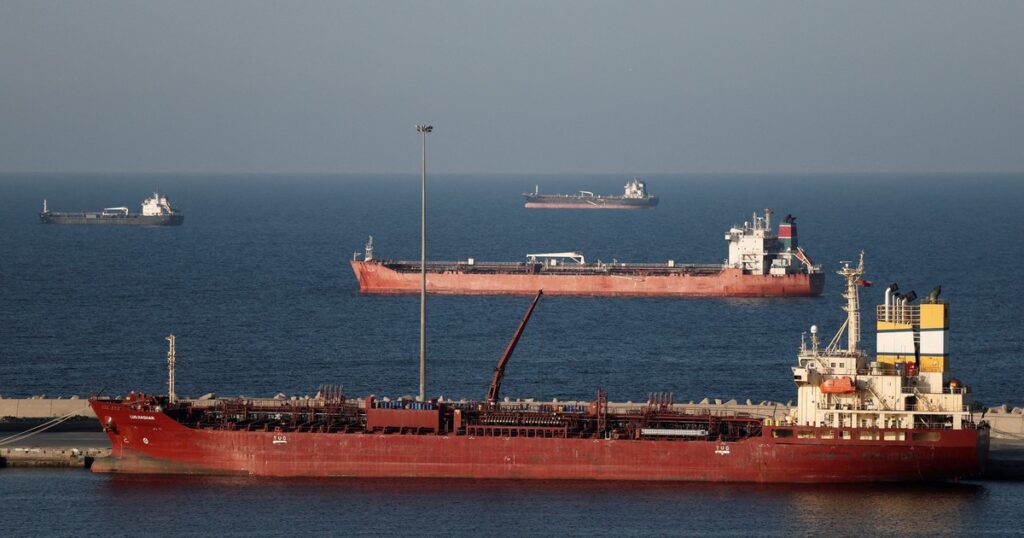
The impact of the blockade is substantial. Around 1,000 ships are currently immobilized due to Iran’s partial closure, dramatically reducing traffic through the strait. Before the conflict, the passage carried roughly one-fifth of global oil and gas shipments and nearly a third of global fertilizer supplies, making it vital for energy markets and international food production.
Only about 130 vessels have successfully traversed the strait since hostilities began a number equivalent to a typical day’s traffic under normal conditions. The bottleneck has raised alarms about supply chain interruptions, rising energy prices, and potential inflationary effects, particularly for import-dependent economies in Africa and Asia.
Starmer acknowledged that reopening the strait would be complex and time-consuming, even after active conflicts ease. He emphasized that industry leaders’ primary concern is not insurance coverage but the physical safety of transit through the waterway.
He underlined the need for a coordinated strategy combining military readiness, diplomatic engagement, and private-sector collaboration.
“We require a unified approach military strength alongside diplomatic action, partnership with industry, and above all, steady and decisive leadership,” Starmer said.
The talks will involve major European economies such as Germany, Italy, and the Netherlands, as well as Indo-Pacific partners including Japan, South Korea, and Australia. Additional participants include Canada, New Zealand, and the United Arab Emirates, reflecting a broad coalition of countries dependent on secure maritime trade routes.
This meeting is the first time this coalition has convened specifically to formulate a joint plan for reopening the strait. According to Downing Street, military planners will follow up with operational discussions to ensure safe passage once conditions permit.
Iran, however, has maintained a firm position. The Islamic Revolutionary Guard Corps declared that the strait would remain closed to what it termed “enemies of the nation,” signaling Tehran’s control over the waterway and limited willingness to de-escalate in the near term.
Trump reinforced the US hardline stance in a separate statement, indicating that any ceasefire would require Iran to relinquish control of the strait. He warned that US military pressure would continue until the passage is “open, free, and clear.”
For African nations such as Nigeria, the talks carry significant implications. As both an exporter of energy and an importer of refined petroleum and fertilizers, the country is vulnerable to prolonged disruptions in global shipping and commodity flows.
The London discussions are therefore seen as both a test of Western diplomatic coordination and a broader effort to stabilize a global trade lifeline already affecting economies across multiple continents.