

Nigeria has reached a £746 million financing deal with the United Kingdom to upgrade two of its busiest seaports, a step authorities say will boost its position as a leading maritime trade hub in West and Central Africa.
The investment will support improvements at the Lagos Port Complex in Apapa and the Tincan Island Port Complex, which together process the bulk of the country’s seaborne trade.
The announcement was made by Nigeria’s Minister of Marine and Blue Economy, Adegboyega Oyetola, in a statement issued Tuesday through his Special Adviser, Dr Bolaji Akinola.
Backed by UK Export Finance, the funding package is intended to drive a major transformation of port infrastructure at both locations.
Combined, the two facilities account for over 70 percent of Nigeria’s imports and exports, making them critical to the nation’s shipping and trade network.
Reports indicate the agreement is set to be officially signed during President Bola Tinubu’s state visit to London on March 18–19, 2026, highlighting stronger economic ties between Nigeria and the UK.
Tackling congestion and outdated systems
Oyetola described the deal as a significant milestone in efforts to modernise Nigeria’s maritime sector and enhance operational performance at its busiest ports.
He noted that the agreement marks a turning point for the industry, which has long faced structural challenges.
For years, the Apapa and Tincan Island ports have handled most cargo traffic, but inefficiencies caused by congestion, ageing facilities, and reliance on manual processes have slowed operations and driven up costs.
According to the minister, the upgrade plan will introduce modern cargo-handling technology, expand port capacity, and implement integrated digital solutions to ease bottlenecks.
Enhancing Nigeria’s position in regional trade
Oyetola added that improved infrastructure and automation will position Nigeria’s ports as more competitive within the region’s logistics network.
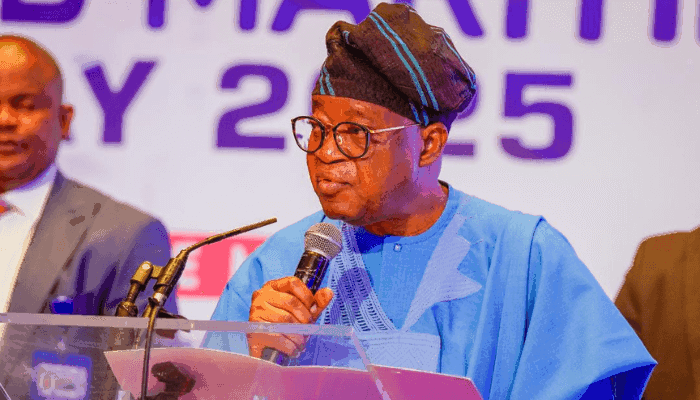
He explained that the partnership with the UK is expected to usher in a new phase in port management and operations across the country.
With digital systems and automation in place, efficiency, transparency, and reliability are projected to improve significantly, with the long-term goal of building a modern and competitive port system capable of serving as a key hub for West and Central Africa.
Authorities also expect shorter vessel turnaround times and reduced cargo delays, as paper-based processes are replaced with more advanced systems.
Once completed, the modernisation is set to transform how Nigeria’s ports operate and enhance the country’s competitiveness among Africa’s emerging maritime hubs.