
Through renewed security cooperation with Algeria, France is moving closer to the Alliance of Sahel States (AES), aiming to regain strategic influence in a region where its military presence has waned.
France is recalibrating its approach in the Sahel region by strengthening ties with Algeria, following high-level talks in Algiers between French Interior Minister Laurent Nuñez and Algerian President Abdelmadjid Tebboune.
The two leaders agreed to “reactivate a high-level security cooperation mechanism,” restoring collaboration on intelligence sharing, judicial coordination, and policing after months of diplomatic tension.
This strategic pivot comes as France has withdrawn troops from key Sahel countries, including Mali, Niger, and Burkina Faso, the three military-led governments now forming the Alliance of Sahel States. These nations expelled French forces amid allegations of failed security operations and rising nationalist sentiment.
Algeria’s geographic position makes it pivotal for France’s revised Africa strategy. Sharing long, porous borders with Mali and Niger, Algeria is central to regional counterterrorism efforts and serves as a critical partner for intelligence on extremist activity across the Sahel.
Rather than redeploying troops directly, France is now emphasizing indirect engagement through regional allies. Nuñez said the cooperation would be restored “as quickly as possible” and at “a very high level,” encompassing intelligence, counterterrorism, and migration enforcement.
This renewed partnership also reflects broader geopolitical competition in Africa. Russia is expanding its security footprint, China is deepening economic and infrastructure ties, and the United States has increased military cooperation with several African nations, highlighting the continent’s rising strategic importance.
By rebuilding security ties with Algeria, France can maintain intelligence visibility near AES countries without stationing troops directly, avoiding the political pushback that led to earlier expulsions.
Analysts suggest that such alliances enable Paris to remain operationally relevant while reshaping its Africa policy toward diplomacy, intelligence collaboration, and regional partnerships rather than permanent military deployments.
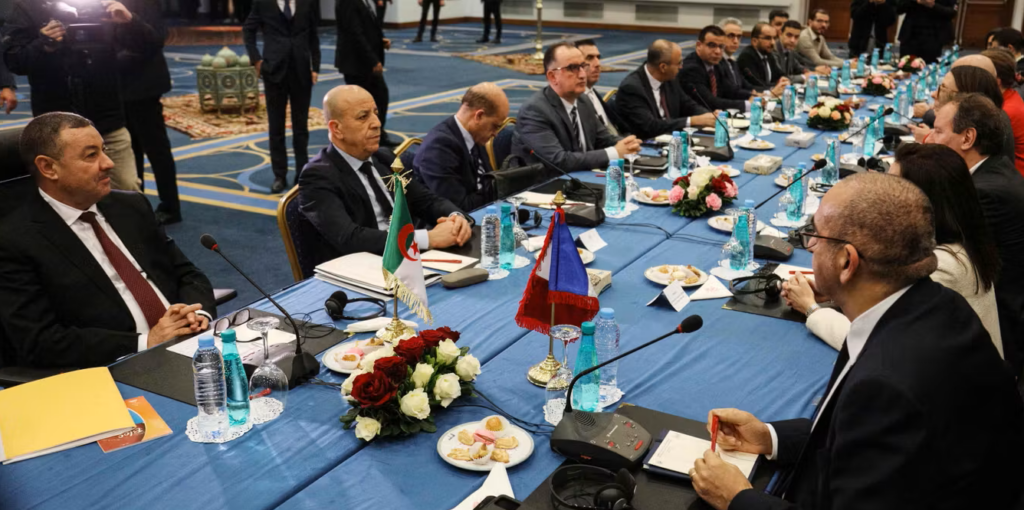
Photos shared by Algerian authorities showed top security officials from both countries present, including France’s domestic intelligence chief and Algeria’s internal security director.
The talks follow strained relations after France’s 2024 support for Moroccan sovereignty over Western Sahara, a position opposed by Algeria.