

Former President of Senegal, Macky Sall, is pursuing one of the most prestigious roles on the global stage: Secretary-General of the United Nations. However, his candidacy has drawn criticism from political opponents at home, who accuse his administration of repression.
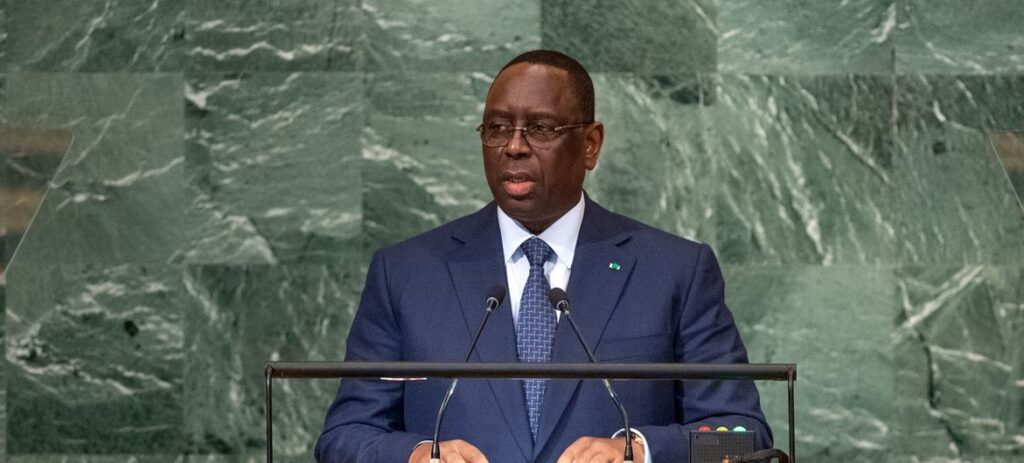
Opponents of Sall, including individuals who claim to have suffered under his rule, voiced their opposition on Friday, citing allegations of violence and economic misconduct during his tenure.
Sall, who led Senegal from 2012 to 2024, is accused of violently suppressing political demonstrations in his final years in office, resulting in dozens of deaths.
The current Senegalese government has also accused Sall of misrepresenting the country’s significant debt. An IMF team confirmed that officials provided false information regarding budget deficits and public debt for the period 2019–2023.
On Monday, Burundi, which currently chairs the African Union, officially nominated Sall for the United Nations’ top position.
“Bloodshed and economic crimes”
At a press briefing on Friday, Pape Abdoulaye Toure of the Families of Martyrs collective accused Sall of attempting to “take refuge at the UN” to avoid prosecution, stating that he “does not deserve to be secretary-general.”
Ruling party MP Guy Marius added that “we cannot accept that the UN be a ‘laundering’ facility for crimes of bloodshed and economic crimes.”
Despite these criticisms, several political groups and notable figures have publicly backed Sall’s candidacy, arguing it could boost Senegal’s diplomatic profile on the world stage.
Senegalese Foreign Minister Cheikh Niang clarified in the local press on Thursday that the nomination was not submitted by Dakar, which “was not involved in this process.”
The current government, in office since April 2024, announced in August that investigations had been opened into violence that occurred during Sall’s administration.
Between March 2021 and February 2024, at least 65 people mostly young were killed during opposition protests, according to a report by journalists and scientists released last year. The demonstrations were met with violent repression, leading to numerous injuries and arrests. Officials under the new administration, led by President Bassirou Diomaye Faye and Prime Minister Ousmane Sonko a key rival of Sall place the death toll at over 80.
An amnesty law covering acts of violence between 2021 and 2024 was enacted in March 2024 during the final weeks of Sall’s presidency. However, Senegal’s Constitutional Council invalidated the legislation in April.