

A top diplomatic representative from the United States has conducted high-level discussions in Niger, signalling Washington’s intention to rebuild relations with Sahel governments led by military authorities after years of tension and growing geopolitical rivalry in the region.
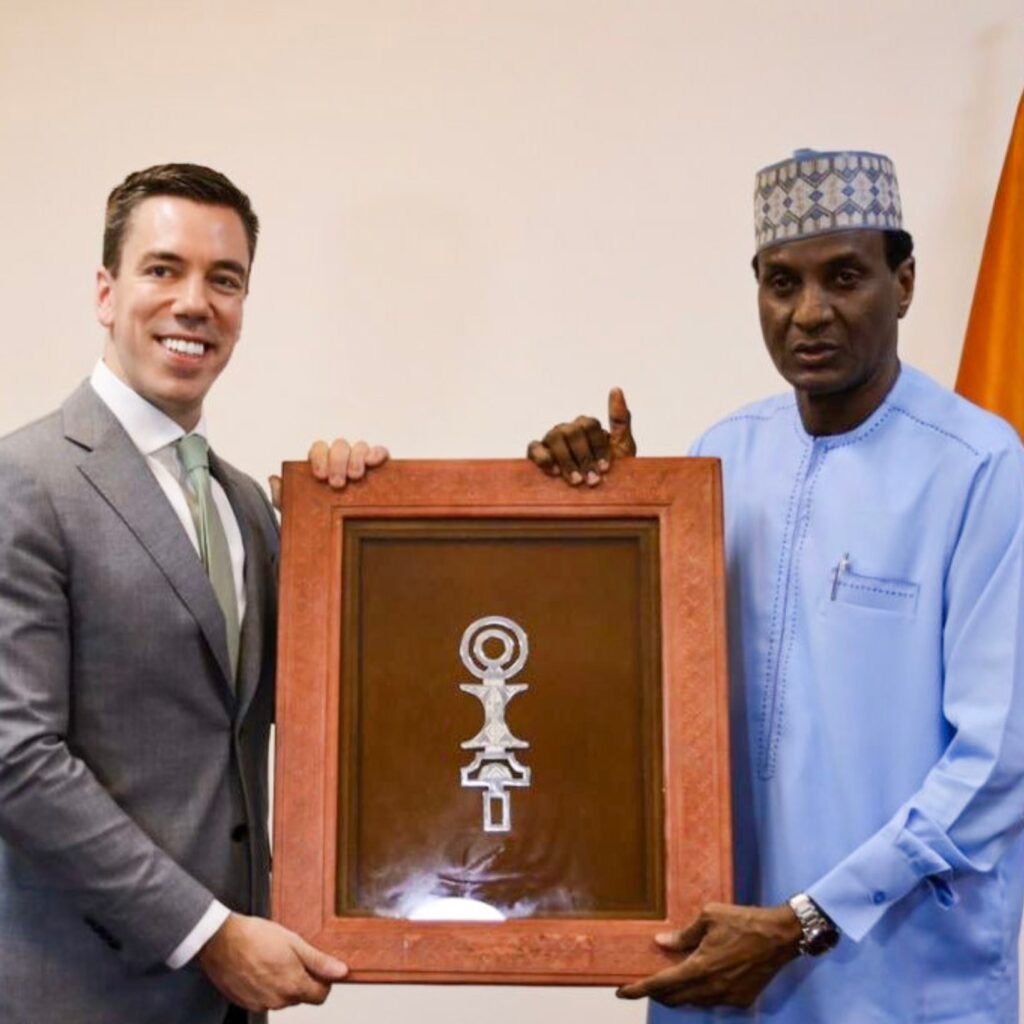
A statement issued after the visit indicated that Senior Bureau Official for African Affairs Nick Checker met Niger’s Foreign Minister Bakary Yaou Sangaré in Niamey on March 13. Their talks focused on the direction of future cooperation between Washington and Niamey.
The meeting took place during a delicate period for regional politics, following the formation of the Alliance of Sahel States by Mali, Burkina Faso, and Niger. The bloc has distanced itself from the Economic Community of West African States, altering the political and security landscape across West Africa.
During the discussions, Checker emphasised Washington’s recognition of Niger’s sovereignty and said the United States remains interested in maintaining dialogue not only with Niger but also with other countries within the Sahel alliance.
The diplomatic stop in Niamey came after Checker held consultations in Mali and Burkina Faso as part of a wider regional engagement effort.
Growing worries in Washington that its strategic influence in the Sahel has declined partly explain the renewed outreach. A series of military takeovers and the withdrawal of Western forces—including the shutdown of a major U.S. drone installation in Niger in 2024—have reshaped the region’s security environment.
In the aftermath of those developments, governments in the Sahel have strengthened relations with alternative partners such as Russia, Turkey, and China, prompting the United States to reconsider its approach to engagement in the area.
Washington’s updated policy is expected to place greater emphasis on economic cooperation and development initiatives rather than relying primarily on military partnerships.
Officials familiar with the talks said subjects discussed during the visit included trade opportunities, investment prospects, and coordination on counter-terrorism efforts.
Health cooperation is also emerging as a key element of the U.S. strategy. Initiatives under consideration include expanded medical supply arrangements, pharmaceutical distribution programmes, and support for disease monitoring systems and vaccination infrastructure across African countries.
While in Niger, Checker also held talks with Prime Minister Ali Mahamane Lamine Zeine to examine potential areas of collaboration that could contribute to economic development and stability within the Sahel region.
Both delegations agreed to maintain dialogue through relevant government ministries in order to identify practical forms of cooperation that respect Niger’s sovereignty while addressing mutual economic and security concerns.