

The U.S. is reinforcing its presence in West Africa’s Sahel, signing a $147 million health agreement with Burkina Faso that combines humanitarian aid with strategic interests.
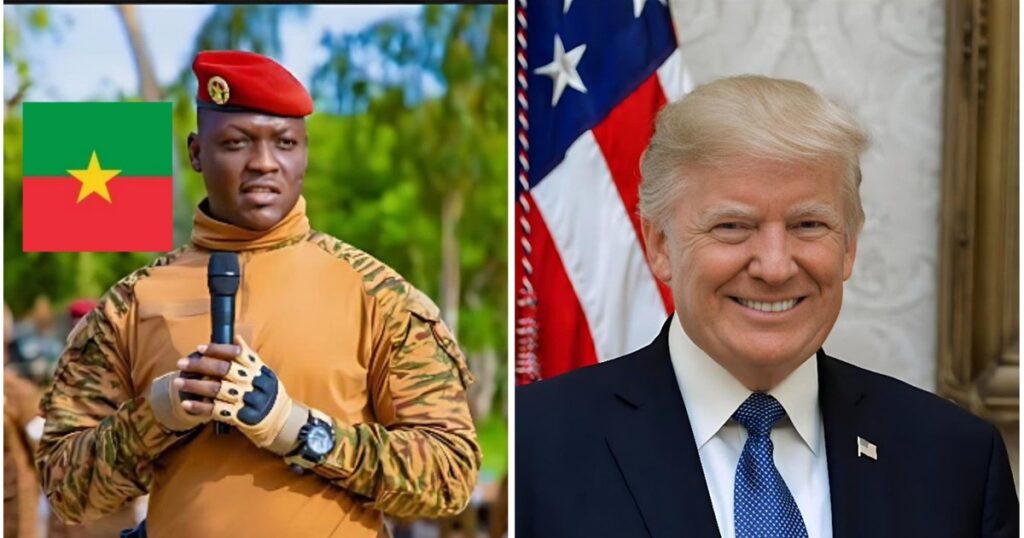
The agreement with Burkina Faso aims to bolster primary healthcare, improve disease monitoring, and expand access to community-level medical services, coming as global powers compete for influence in the Sahel amid shifting alliances and security changes.
Washington will provide up to $147 million over five years to help Burkina Faso combat HIV/AIDS, malaria, and other infectious diseases, while enhancing outbreak detection and response systems. The Burkinabe government will contribute $107 million to its health sector, with an additional $12 million dedicated to community health, digital reporting, and laboratory capacity expansion.
Through deeper involvement in Burkina Faso, the U.S. appears to be combining soft-power diplomacy with efforts to maintain influence in a region increasingly courted by rival powers. The deal, signed with the country’s military-led administration, reflects a strategic recalibration as the Sahel drifts from traditional Western security partnerships.
With French forces expelled and Russian ties deepening, Washington is leaning on health diplomacy as a subtler yet strategically significant tool of influence. While health security is the official aim, the region’s uranium, gold, and critical mineral reserves add a geopolitical dimension, highlighting U.S. interest in countering rival presence without overtly linking funding to mineral access or military basing.
Strengthening health systems also serves U.S. domestic interests: preventing cross-border pandemics, stabilizing fragile states, reducing migration pressures, and maintaining engagement with governments that might otherwise turn to other powers.
Not all African states have embraced the model. Zimbabwe withdrew from a proposed U.S. health agreement over sovereignty concerns, particularly clauses on data governance. Similarly, Zambia delayed signing a major deal, citing misalignment with national interests and requesting revisions.
Officially, these partnerships prioritize mutual health security, but unofficially, they extend U.S. influence: sustaining diplomatic presence, enhancing intelligence via public health systems, leveraging multilateral platforms, and indirectly positioning in resource-rich areas.
As of February 25, the U.S. State Department has concluded 17 bilateral health agreements with African countries including Botswana, Burundi, Cameroon, Côte d’Ivoire, Eswatini, Ethiopia, Kenya, Lesotho, Liberia, Madagascar, Malawi, Mozambique, Nigeria, Rwanda, Sierra Leone, and Uganda.
In today’s environment of intensifying great-power competition, America’s health agreements in Africa are about more than medical aid—they are instruments of influence, with the Sahel emerging as a critical arena for strategic engagement.