

The United Nations has announced the closure of two temporary operating bases in the Central African Republic (CAR), signaling a major adjustment in its peacekeeping presence.
The facilities, situated in Mbrès (Nana-Grébizi prefecture) and Dékoa (Kémo prefecture), were part of the United Nations Multidimensional Integrated Stabilization Mission in the Central African Republic, deployed in 2014 under UN Security Council approval to protect civilians and support the peace process.
According to MINUSCA, the shutdowns form part of a broader reorganization of its security operations, reflecting improved local conditions and the gradual transfer of responsibilities to CAR authorities.
The mission stressed that this is not a total withdrawal; long-range patrols will continue along key routes such as Dékoa-Mala and Dékoa-Bouca to maintain security.
The vacated infrastructure will be handed over to Central African defense and security forces, aiming to reinforce state authority and boost the government’s presence in previously vulnerable areas.
The handover includes formal arrangements to ensure operational continuity and allow local security forces to use the bases effectively.
Shifting foreign footprints in Africa
The MINUSCA base closures align with a broader continental trend. Several European countries, particularly France, have scaled back or reorganized military bases in West and Central Africa in response to evolving security dynamics and domestic political pressures.
France, for instance, has gradually reduced its Sahelian deployments following years of counterterrorism operations in Mali and Niger, reflecting a wider reassessment of foreign military engagement in Africa.
Meanwhile, the United States is planning to expand its presence in strategic regions, deploying troops and equipment to several African countries to support counterterrorism, maritime security, and rapid-response operations.
For CAR, the transfer of MINUSCA infrastructure marks progress toward local ownership of security, while reflecting the broader recalibration of foreign military bases across Africa.
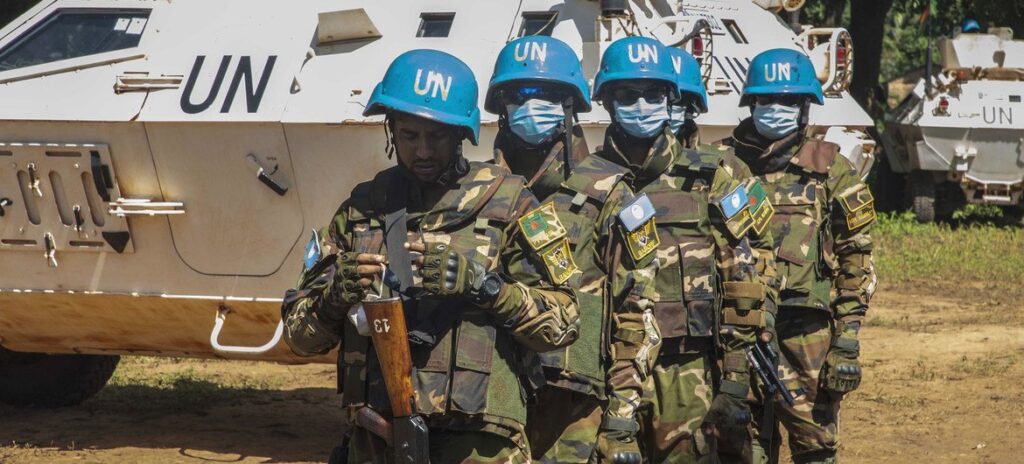
As African nations assume greater responsibility for their territories, foreign missions are increasingly being restructured rather than fully withdrawn, signaling a new phase in international security partnerships.