

A $500 million concessional facility has been cleared by the World Bank to reinforce Nigeria’s agriculture sector, with a strong focus on smallholder farmers and agribusinesses amid ongoing food security concerns and weak productivity.
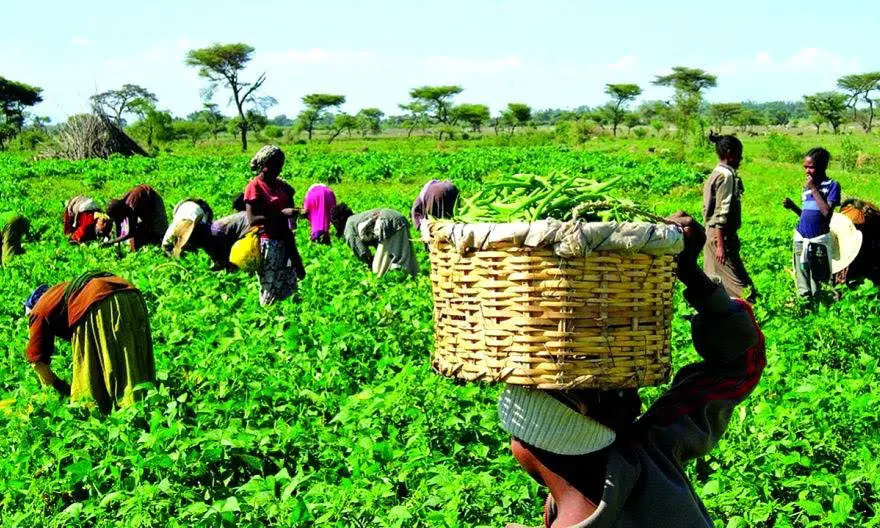
Financed through the International Development Association, the support will fund the Nigeria Sustainable Agricultural Value-Chains for Growth (AGROW) initiative over a six-year span from 2026 to 2032.
The initiative seeks to raise farm output, develop stronger agricultural value chains, and generate employment, while ensuring a more stable food supply across Africa’s most populous country.
Farming continues to play a vital role in Nigeria’s economy, accounting for roughly a quarter of GDP and providing jobs for nearly half of the population.
Despite its importance, the sector has long faced challenges including poor yields, inadequate infrastructure, climate-related disruptions, and restricted financing, leaving many small-scale farmers operating at subsistence level.
Through AGROW, efforts will be made to transform this system by improving connections between farmers, markets, and private buyers.
The programme will offer matching grants to agribusinesses that procure from smallholder farmers, particularly in areas such as processing, storage, and access to markets.
Priority crops under the project include rice, maize, cassava, and soybeans—key staples for both consumption and industrial use.
In addition to financial support, the initiative will invest in agricultural research and extension services, promote climate-resilient seed varieties, and roll out a nationwide digital registry for farms and farmers.
Officials indicate that this digital platform will enhance planning, distribution of inputs, and access to advisory services such as weather updates.
The project also aims to strengthen regulation within the seed and fertiliser sectors, while encouraging greater private sector involvement in input supply and land investments.
According to Mathew Verghis, AGROW represents a major step forward for Nigeria’s agriculture by empowering farmers, unlocking private sector growth, and improving long-term food security.
He noted that the programme could directly benefit up to one million farmers while drawing significant private investment into the sector.
The World Bank projects that the initiative could attract an additional $220 million in private funding over its duration.
This financial backing aligns with wider government efforts to revitalise agriculture as a key growth driver and reduce dependence on food imports.
Recent measures have included irrigation expansion projects aimed at supporting year-round farming activities.
Even so, government spending on agriculture remains limited, with less than 2% of Nigeria’s 2025 budget allocated to the sector well below the 10% benchmark set under the Maputo Declaration.
Previous programmes like the Commercial Agriculture Credit Scheme and the Anchor Borrowers’ Programme have attempted to improve financing and increase local production, though structural issues continue to hinder progress.
With food prices rising and household budgets under pressure, AGROW’s performance will be closely monitored as an indicator of whether policy reforms and external funding can deliver real benefits for both farmers and consumers.