

The World Bank has downgraded Ghana’s Energy Sector Recovery Programme from “Moderately Satisfactory” to “Unsatisfactory”, saying implementation has fallen behind schedule because of financing constraints, election-related disruptions, new procurement controls and delays by implementing agencies.
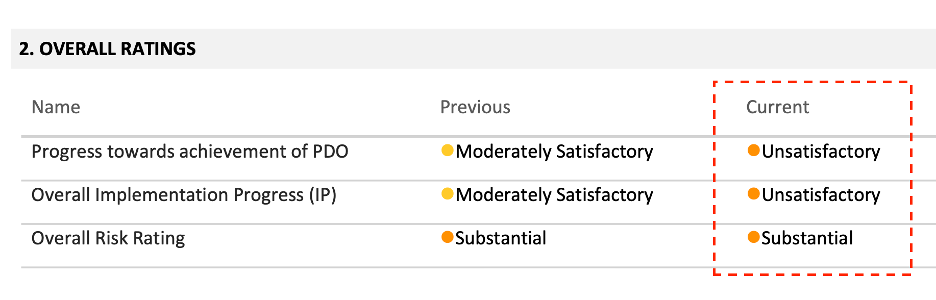
In its latest implementation report dated June 30, 2026, the Bank said a lack of Commitment Authorizations from the Ministry of Finance, alongside new fiscal controls and procurement restrictions, had delayed several key reforms across the electricity sector.
The Energy Sector Recovery Programme was approved in June 2024 and became effective in March 2025.
It aims to improve the financial sustainability of the Electricity Company of Ghana (ECG) by strengthening operational efficiency, reducing revenue shortfalls and expanding access to clean cooking solutions across the country.
The latest implementation assessment paints a mixed picture.
Only one programme indicator was fully achieved during the reporting period.
ECG successfully published its audited financial statements for the 2025 financial year in May 2026, fulfilling one of the programme’s key transparency requirements.
However, the audited financial statements are still not publicly available on ECG’s website at the time of writing.
Three other indicators were assessed as either “Partially Achieved” or “Progressing“.
ECG has implemented its energy accounting system in only 20% of operational districts. The World Bank now considers the target of nationwide implementation likely to be delayed.
Also, ECG’s customer service improvement indicator was only partially achieved. While ECG completed its 2025 customer satisfaction survey, the results remain in draft form and have not yet been published.
Meanwhile, the first phase of the National LPG Promotion Programme was rated as partially achieved. Although approximately 38,000 people have received clean cooking solutions, this remains well below the programme’s final target of 457,000 and implementation has stalled.
Four other programme indicators were either not achieved or assessed as off track.
GRIDCo has yet to submit the required Security Constrained Economic Dispatch methodology to the Energy Commission and has not procured the consultants needed to complete the work.
This Security Constrained Economic Dispatch is intended to reduce the cost of electricity generation by ensuring lower cost power plants are dispatched ahead of more expensive generators.
ECG’s collection efficiency has also deteriorated. The company’s collection rate currently stands at 85%, below the programme baseline of 86% and significantly behind the trajectory needed to reach the 93% target by the end of 2027.
The Bank further noted that ECG has not yet integrated an Independent Power Producer invoicing system into its financial management software.
Meanwhile, the combined financial losses of ECG and the Northern Electricity Distribution Company (NEDCo) continue to increase, reaching approximately $1.5 billion instead of declining towards the programme target of $525 million by the end of 2027.
According to the World Bank, several factors contributed to the programme’s deteriorating performance.
The World Bank repeatedly cited the lack of Commitment Authorizations from the Ministry of Finance as a key reason for implementation delays.
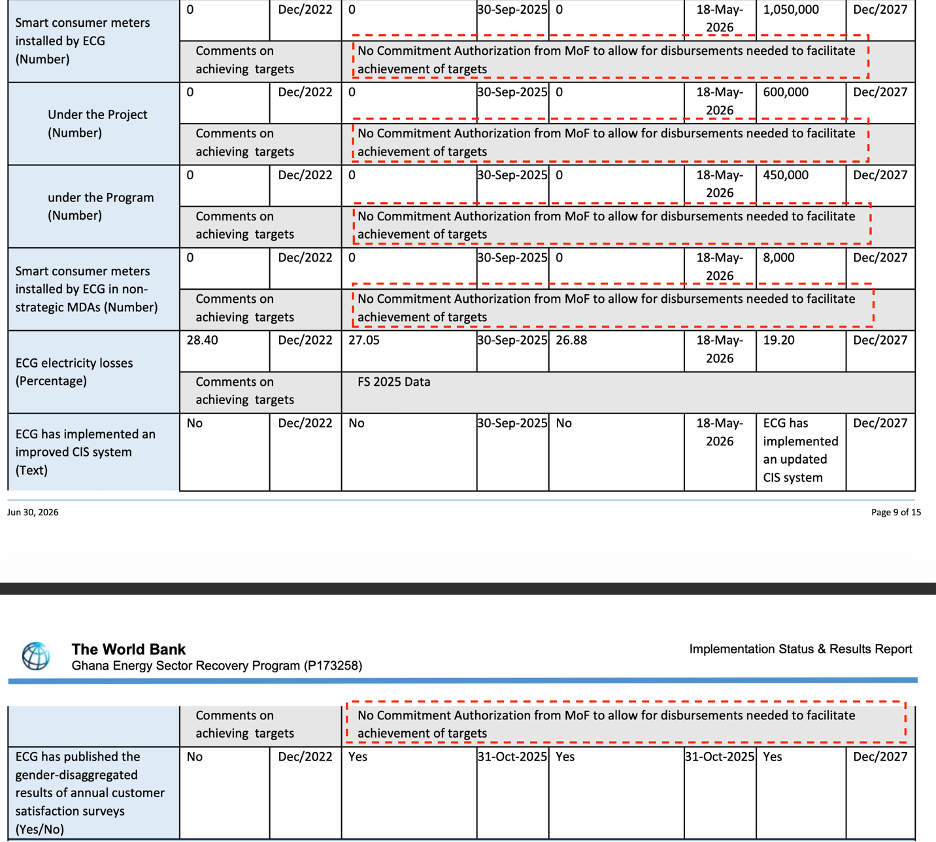
The phrase “No Commitment Authorization from MoF to allow for disbursements needed to facilitate achievement of targets” appears repeatedly throughout the implementation report.

Minister for Finance, Dr Cassiel Ato Forson
According to the Bank, the funding constraints have slowed the distribution of LPG stove packages to households, schools and caterers.
Plans to install more than one million smart meters have also stalled, including smart meters intended for government ministries, departments and agencies.
ECG has also been unable to implement its electronic Independent Power Producer invoicing system because the required funding has not been authorized.
GRIDCo’s procurement of consultants needed to develop its Security Constrained Economic Dispatch methodology has also been delayed for the same reason.
Even preparations for ECG’s next customer satisfaction survey have been affected, with the Bank attributing the delay to the absence of Ministry of Finance approval for the necessary disbursements.
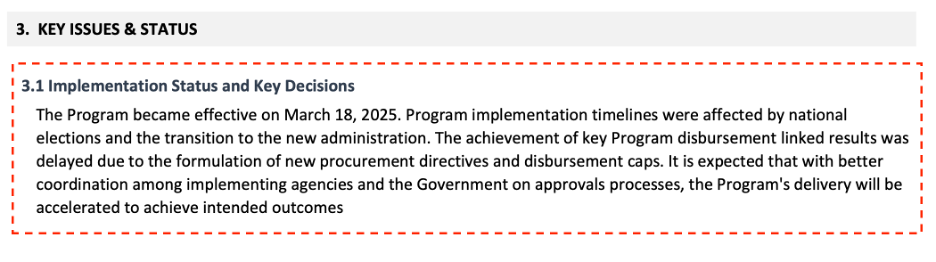
In addition, new procurement directives and disbursement caps introduced by the Ministry of Finance further delayed implementation.
The programme was also affected by Ghana’s national elections and the subsequent transition to a new administration in early 2025.
Finally, implementation challenges within the agencies themselves also contributed to the downgrade.
Despite the downgrade, the World Bank said it expects implementation to accelerate if coordination improves between government and the implementing agencies, particularly with regard to approval processes.
The energy sector recovery programme is central to Ghana’s efforts to reduce electricity sector losses, strengthen ECG’s finances and ease the fiscal burden of the energy sector.
Its importance has only grown in recent months.
Despite the introduction of the additional GH¢1 levy on petroleum products in 2025, the government still transferred GH¢12.9 billion from the treasury to support energy sector payments that year.
The World Bank’s downgrade therefore underscores that restoring the sector’s financial health will depend not only on raising additional revenue, but also on sustained implementation of the structural reforms intended to improve operational efficiency and financial performance.
JoyNews Research contacted both the Ministry of Energy and the Ministry of Finance for comment.
Neither ministry had responded at the time of publication.