

The Reserve Bank of Zimbabwe has unveiled a fresh set of Zimbabwe Gold (ZiG) banknotes in a bid to rebuild trust in the local currency after years of volatility. The updated ZiG10, ZiG20 and ZiG50 notes are set to go into circulation on 7 April 2026, with the ZiG100 and ZiG200 denominations to be released at a later date when officials deem the timing appropriate.
The newly issued notes carry images of the Big Five, a move intended to strengthen the currency’s national symbolism. During the presentation of the 2026 Monetary Policy Statement, RBZ Governor John Mushayavanhu announced the rollout, assuring the public that the current ZiG notes will continue to be accepted as legal tender.
He explained that a statutory instrument formalising the release would be issued the same day. While the ZiG10 and ZiG20 are already in use, additional denominations will soon circulate alongside them.
He further clarified that commercial banks will convert part of their electronic holdings into cash. According to him, this process will not expand reserve money, as the physical notes will simply replace existing digital balances.
Reasons behind the new design
The update follows public criticism of the first ZiG series introduced in 2024, which reportedly faded and wore out quickly. Businesses and consumers found the notes inconvenient, prompting the central bank to enhance both their durability and security features.
Authorities have indicated that older notes will be phased out gradually. Financial institutions will return them to the RBZ for destruction and replacement at equivalent value. A nationwide awareness campaign is also planned to educate citizens about the new security elements before circulation begins.
Stronger economic backdrop
The decision to introduce higher-value notes is significant. Initially, the RBZ avoided larger denominations due to concerns they could accelerate inflation. However, the economic environment has improved.
Inflation has dropped substantially, reaching 4.1% in January 2026 and 3.8% in February the lowest level in nearly three decades. Meanwhile, reserves supporting the ZiG have expanded from US$276 million at inception to US$1.2 billion by the close of 2025.
With improved fundamentals, the central bank believes it can broaden the range of notes without expanding the money supply.
The real challenge ahead
Although the redesigned notes resolve practical issues, the greater hurdle is public confidence. A large portion of everyday transactions especially within Zimbabwe’s informal sector continues to be conducted in US dollars.
Informal traders, transport operators, and small businesses overwhelmingly favour the USD. Even many major companies generate most of their income in foreign currency, citing its stability.
Government practices have also contributed to skepticism. Despite introducing the ZiG, some public services still demand payment in US dollars, complicating efforts to encourage widespread use of the local currency.
Rebuilding credibility
Zimbabwe’s monetary history has left deep scars. Years of hyperinflation, the collapse of the Zimbabwe dollar, the multi-currency era, and unsuccessful bond note and ZWL initiatives have repeatedly eroded trust.
When the ZiG debuted in 2024 at an exchange rate of 13.56 per US dollar, backed by gold and foreign reserves, it quickly depreciated and was officially devalued by 42.55% in September that year.
Since then, stricter monetary measures and stronger reserves have helped steady the currency, creating room for the latest reforms.
For the RBZ, introducing more resilient and secure banknotes represents another effort to restore faith. Yet the long-term viability of the ZiG will depend not only on improved design, but also on consistent policy implementation, fiscal responsibility, and the commitment of both government and businesses to treat it as a reliable store of value.
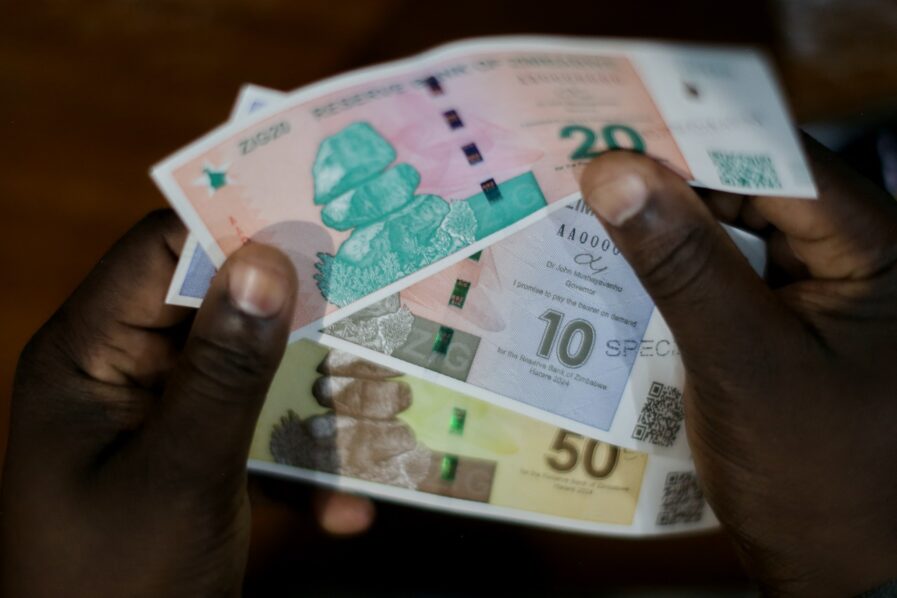
The redesigned ZiG notes signal renewed optimism from the central bank, supported by declining inflation and growing reserves. While they address concerns about quality and security, lasting success will hinge on convincing citizens many of whom have endured repeated currency failures that the ZiG can retain value and gain universal acceptance across the economy.