

South Africa’s political parties have mostly supported President Cyril Ramaphosa’s decision to deploy troops to assist the police in tackling gang violence and illegal mining in two provinces.
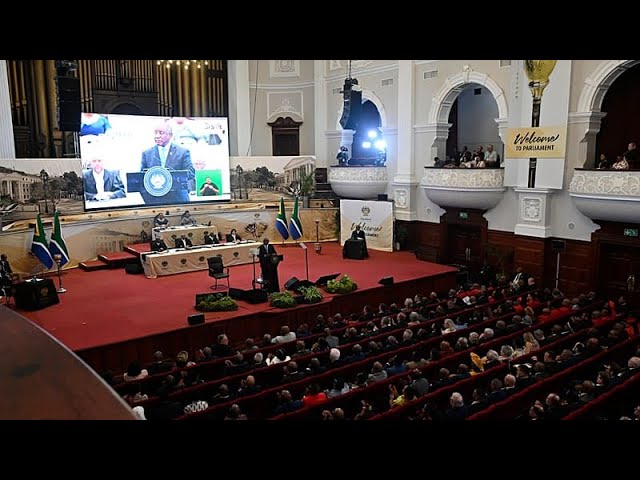
Delivering the annual State of the Nation address in Cape Town on Thursday, Ramaphosa identified organised crime as the country’s most pressing threat. South Africa currently faces a murder rate of roughly 60 deaths per day, fueled by gang wars in Cape Town and mass shootings linked to illegal mining near Johannesburg.
“Organised crime is now the most immediate threat to our democracy, society, and economic development,” he said, noting that the crisis affects lives, spreads fear across communities, and discourages investment.
The president confirmed that he had instructed the Minister of Police and the (SANDF) to quickly draw up a tactical deployment plan for Western Cape and Gauteng provinces. Additional measures include recruiting 5,500 police officers, strengthening intelligence capabilities, and targeting priority crime syndicates.
While most parties welcomed the move, the uMkhonto weSizwe party, associated with former president , expressed skepticism. Acting leader Des van Rooyen criticised the lack of clarity on funding, saying the defence force has faced systematic cuts, making the deployment “laughable” without proper resourcing.
The Democratic Alliance (DA), South Africa’s second-largest party and part of the national unity government, praised the decision. Party leader John Steenhuisen highlighted that while the extra resources would be welcomed in Cape Town and the Western Cape, military operations must be coordinated under the (SAPS), as troops cannot operate independently of law enforcement.
On economic matters, Ramaphosa addressed the country’s role in a turbulent global economy, stressing the importance of diversifying international partnerships to reduce risks.
Gustavo de Carvalho, a public policy researcher at the , noted that the president was responding to rising international rivalries and challenges in relations with the United States under former President Donald Trump.
The president acknowledged that, while the economy has “turned a corner,” faster growth is needed to address entrenched social issues. He admitted shortcomings in service delivery, particularly in the water sector, which continues to affect millions.
To address this, Ramaphosa announced nearly $10 billion in public funds over the next three years to upgrade deteriorating water infrastructure.