

Abdelmadjid Tebboune announced on Monday the commencement of a long-awaited trans-Saharan gas pipeline via Niger, signaling a major diplomatic and economic reset between the two neighboring nations.
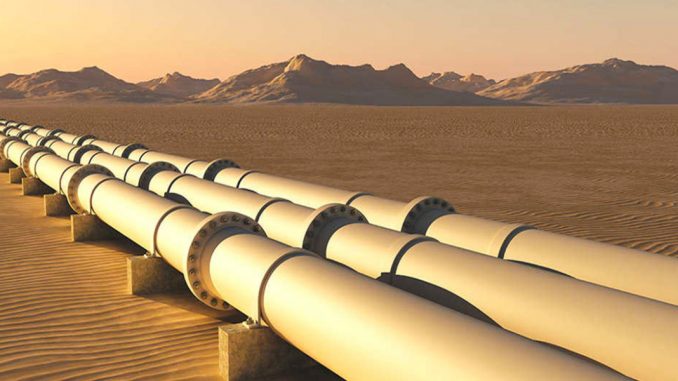
Abdelmadjid Tebboune announced the launch of the long-anticipated trans-Saharan gas pipeline through Niger as Abdourahamane Tchiani visited Algiers for high-level talks. The meeting is widely seen as a sign that diplomatic tensions between the neighboring countries are easing after a prolonged standoff.
“We have agreed to start the project to complete the trans-Saharan gas pipeline through Nigerien territory after the holy month of Ramadan,” Tebboune told reporters at a joint press conference in Algiers. He added that Algeria’s state energy company, Sonatrach, will take the lead in laying the pipeline across Niger.
The Algerian leader also highlighted the importance of Tchiani’s visit, noting that both nations are committed to ending hostilities and advancing cooperation in security, energy, and education.
“This visit marks the end of an abnormal period of cold relations between our countries, even though the peoples of Algeria and Niger maintained contact,” Tebboune said, adding, “We will safeguard the friendship that has linked our nations for generations.”
The rift between Algeria and Niger began in April of last year following a dispute over a drone incident involving Mali, an ally of Niger and Burkina Faso. Mali accused Algeria of shooting down one of its drones, while Algeria claimed the aircraft violated its airspace, marking the third such breach. Mali countered that the wreckage was found 9.5 kilometers inside its territory and rejected Algeria’s claims.
In response, Niger, Mali, and Burkina Faso, members of the Alliance of Sahel States, recalled their ambassadors from Algeria. Algeria’s Foreign Ministry defended its actions, citing radar data showing a 1.6-kilometer airspace violation, and denied any wrongdoing, accusing Mali of deflecting from domestic issues.
The crisis escalated further when Mali closed its airspace to Algerian flights and accused Algeria of supporting international terrorism, though no evidence was provided. Algeria responded by recalling its diplomats from Niger and Mali and delaying the arrival of its envoy to Burkina Faso.
The recent agreement and pipeline announcement signal a diplomatic reset, moving both countries toward renewed cooperation after months of strained relations.