

Antarctica will be the prime location to witness the first solar eclipse of 2026 on Tuesday, although only about two percent of the world’s population will have a clear view. Most viewers will be scientists at research stations or the region’s native wildlife.
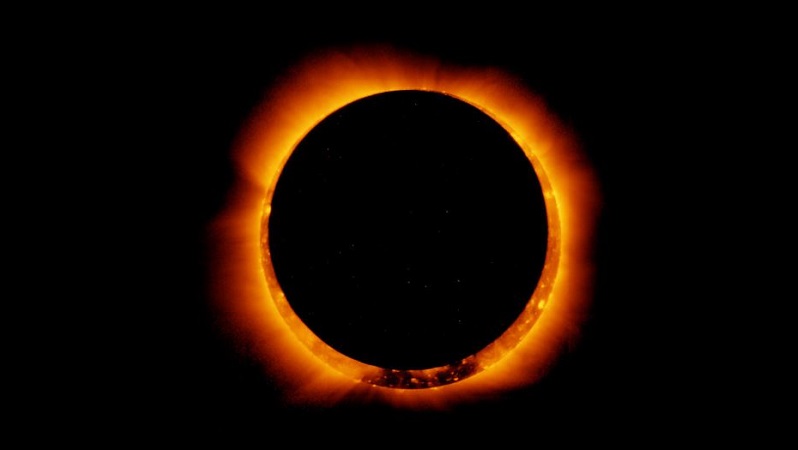
This eclipse is annular, meaning the moon passes between the Earth and the sun but does not completely cover it. The result is the striking “ring of fire” effect, where the sun’s bright outer edge forms a glowing circle. Certain spots in Antarctica will experience the full display, offering a rare spectacle for researchers and penguins alike.
Parts of southern Africa and the southern tip of South America will also see a partial eclipse. In South Africa, the peak will occur in the early afternoon, and the National Space Agency has advised anyone observing to wear proper protective eyewear.
While solar eclipses occur several times a year, they are only visible along the specific path of the moon’s shadow. Last year saw two partial eclipses, and North America experienced a total solar eclipse in 2024.
Looking ahead, another total solar eclipse is expected in August 2026, visible in Greenland, Iceland, Spain, Russia, and parts of Portugal. Large areas of Europe, Africa, and North America will witness a partial eclipse.