

China’s battery producers are facing the fallout from Zimbabwe’s unexpected halt on lithium concentrate exports, a decision that has unsettled global commodity markets and triggered renewed disruption across the electric vehicle (EV) supply chain.
An immediate suspension of lithium concentrate exports was declared on February 25 by the Government of Zimbabwe, covering even consignments that were already en route to buyers.
This action is part of Harare’s wider plan to expand local mineral processing capacity and secure greater economic returns from the country’s extensive lithium deposits.
Through limiting shipments of unprocessed concentrate, officials are effectively pressuring investors to speed up domestic refining and beneficiation projects.
Reporting by The Africa Report suggests the sudden restriction, aimed at strengthening local value addition, has exposed the heavy reliance of Chinese refiners and battery producers on Zimbabwean spodumene, despite China’s dominant position in global lithium conversion.
Over a short period, Zimbabwe has become an increasingly important source of supply for China’s lithium industry.
Available market figures indicate that about 19 percent of China’s lithium concentrate imports originated from Zimbabwe in the most recent reporting year, making the Southern African country one of Beijing’s key upstream suppliers before the freeze took effect.
More granular customs statistics reveal that, in some months, Zimbabwe contributed between 10 and 15 percent of China’s lithium concentrate imports, depending on trade volumes and reporting timelines.
Put simply, Zimbabwe’s contribution has consistently remained in the upper-teen range representing meaningful exposure for a sector dependent on steady raw material inflows.
For Chinese refiners, the development amounts to a tangible supply disruption.
Although China leads the world in lithium processing and battery production, it still relies heavily on imported hard-rock spodumene from Africa and Australia to keep its expansive refining infrastructure running.
Following the announcement, lithium prices climbed sharply, underscoring market anxiety about reduced access to raw materials.
Trading activity reflected immediate concern, with lithium carbonate futures rising as buyers braced for tighter availability, while analysts cautioned that near-term shortages could reverberate across global battery supply networks.
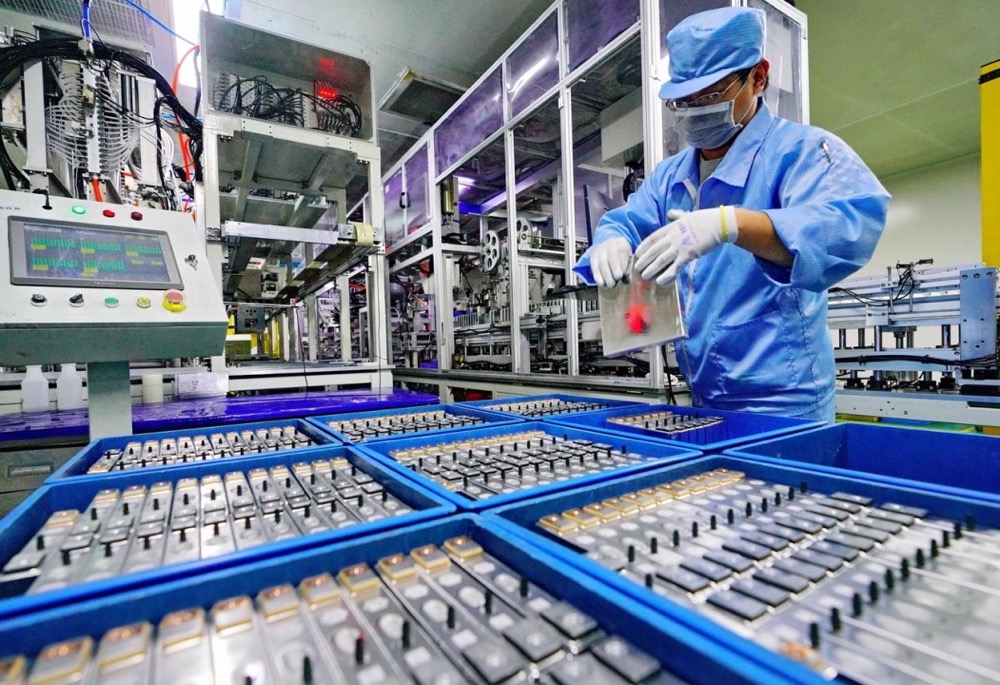
Battery producers in China, already contending with fluctuating prices and slower growth in electric vehicle demand, now face the likelihood of increased production costs and narrower profit margins. Smaller processing firms may struggle with temporary supply gaps if substitute sources are not secured promptly.
Prominent Chinese corporations such as Zhejiang Huayou Cobalt and Sinomine Resource Group have made substantial investments in Zimbabwe’s lithium sector in recent years.
During 2024, Zhejiang Huayou Cobalt joined forces with Tsingshan Holding Group and a Zimbabwean state-owned enterprise to advance a lithium venture valued at between $250 million and $300 million, with projected annual output of roughly 500,000 tonnes of concentrate.
Such capital commitments could now face renewed evaluation as companies consider accelerating construction of local processing facilities to align with Zimbabwe’s increasingly assertive resource policies.
More broadly, the situation illustrates an evolving dynamic within the global energy transition landscape. Even though China retains significant control over refining and battery assembly, countries rich in raw materials are progressively leveraging their resource endowments.
Harare’s policy direction underscores its ambition to move beyond exporting raw commodities and toward building domestic industrial capacity, a shift that may alter supply chain relationships throughout the critical minerals market.
While the interruption to China’s battery sector could be short-lived, the episode highlights a deeper vulnerability: even highly integrated supply chains can be disrupted when strategic minerals become tools of national economic strategy.