

A major cross-continental infrastructure initiative beneath the Strait of Gibraltar is drawing fresh interest as Morocco and Spain move forward with plans for an undersea rail tunnel. The project could transform trade between Africa and Europe while offering an alternative to critical global chokepoints like the Strait of Hormuz.
Growing instability around the Strait of Hormuz has led nations to rethink existing trade routes and seek safer, more reliable options to limit exposure to disruptions.
Concerns have intensified following warnings that any extended blockage in the strait could severely limit global oil supply and push prices sharply upward, with estimates suggesting crude could climb to $200 per barrel.
As a result, focus is shifting toward the Strait of Gibraltar as a vital corridor capable of handling increased trade and logistics activity.
A February report by the Indian Defence Review noted that the nuclear-powered USS Gerald R. Ford activated its public tracking system while heading toward the strait an uncommon move during active deployment.
Tracking information indicated the vessel was nearing the Mediterranean entry point, underscoring the strategic relevance of the route.
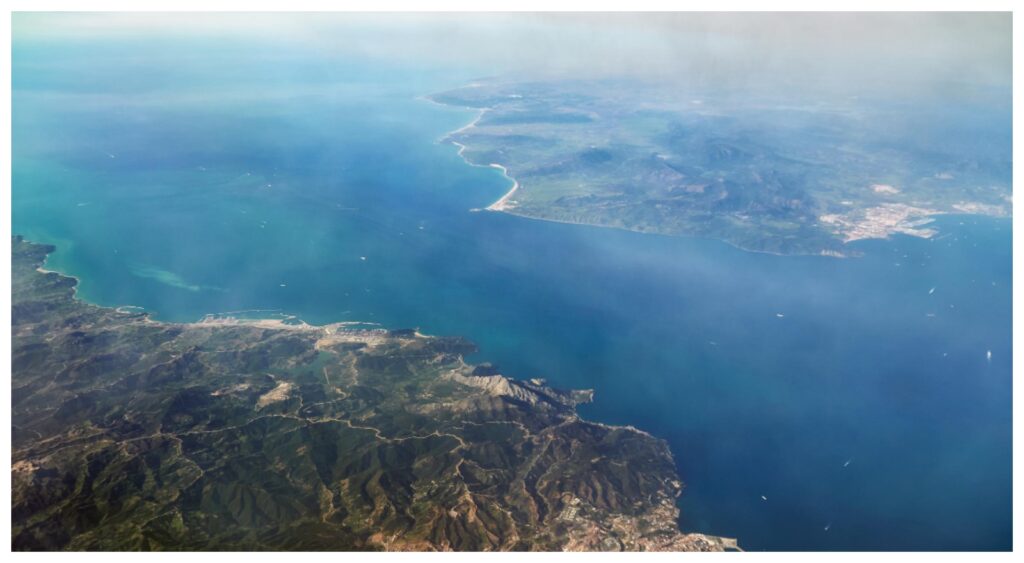
The Strait of Gibraltar serves as the only natural connection between the Atlantic Ocean and the Mediterranean Sea and ranks among the world’s busiest shipping lanes, with roughly 300 जहels transiting daily.
Before the opening of the Suez Canal opening in 1869, it was the sole ocean gateway into the Mediterranean region.
Plans for the tunnel include two railway tubes designed to carry both passengers and cargo, with travel time estimated at about 30 minutes.
Total costs are projected between €15 billion and €20 billion, with Spain expected to contribute more than €8.5 billion.
The idea of a subsea rail link between northern Morocco and southern Spain dates back to a 1979 agreement signed in Fez, though progress has been inconsistent over the decades.
A feasibility study commissioned by the Spanish government and conducted by German engineering firm Herrenknecht concluded that modern technology can support the project, according to Kursiv Uzbekistan.
Spanish consultancy Ineco is currently developing a detailed design, with approval possibly coming as early as 2027.
The initiative, managed by SECEGSA and SNED, is expected to cover around 42 kilometres, including approximately 27 kilometres beneath the sea, connecting Punta Paloma in Cadiz to Cape Malabata near Tangier.
If completed, the tunnel could strengthen North Africa’s role as a logistics hub by linking African production zones directly to European markets and reducing dependence on vulnerable maritime routes.
It also supports broader continental trade ambitions, including those under the African Continental Free Trade Area framework.
However, the project presents major engineering hurdles. Earlier plans for a bridge were abandoned in 1996 due to extreme conditions in the Strait of Gibraltar, where depths can reach 900 metres and ship traffic is intense.
Current proposals focus on a deep rail tunnel passing through the Camarinal Sill at depths of roughly 475 metres below sea level.
Engineers must navigate difficult geological conditions, including unstable rock and clay layers, along with seismic risks associated with the Azores–Gibraltar fault line.
According to a project engineer familiar with the plans, the structure must be designed to endure high pressure and seismic activity over many years.
Once operational, the tunnel is expected to enable passenger and freight movement between Africa and Europe in about 30 minutes, significantly cutting travel time and enhancing Africa’s integration into global supply chains.