
South Africa plans a temporary reduction of a major fuel tax in April, as global oil prices climb due to tensions involving Iran, increasing costs for both households and businesses.
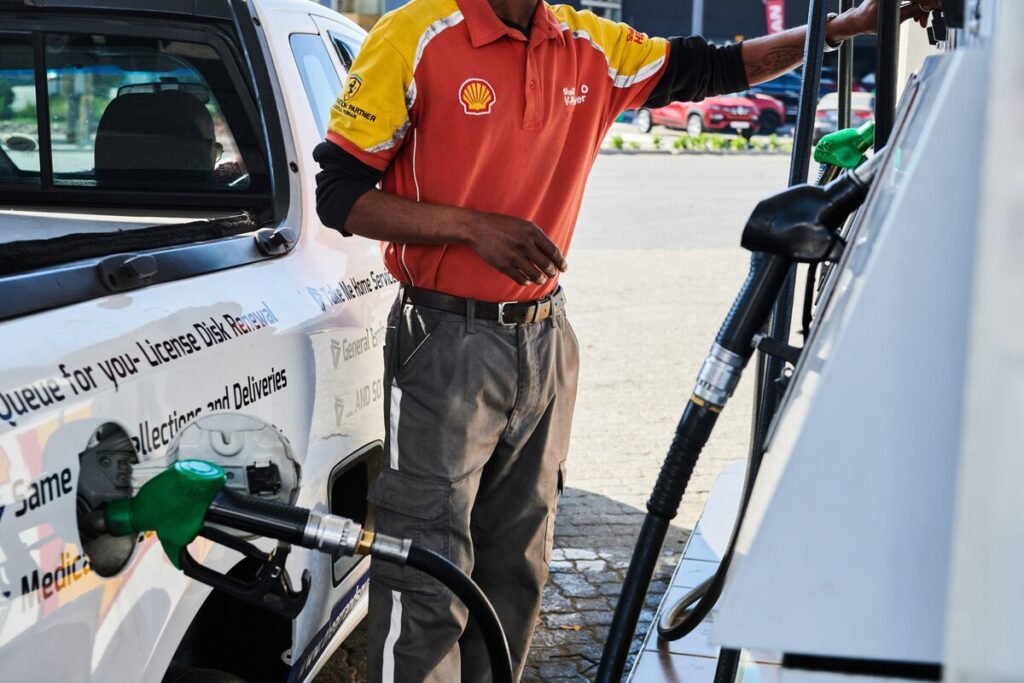
On Tuesday, the government announced it would cut the general fuel levy by approximately $0.16 (3 rand) per litre for petrol and diesel, a step expected to result in roughly $350 million in foregone revenue.
The decision follows calls from labour unions and business organisations seeking to ease the economic burden caused by higher fuel costs.
Despite the temporary tax relief, petrol prices are still projected to rise by around 15% in April, and wholesale diesel could increase by up to 40%, reflecting the magnitude of recent global energy shocks.
Finance Minister Enoch Godongwana said the levy reduction would only be short-term, with government officials considering whether further measures might be warranted in the coming months.
“I will temporarily be lowering the fuel levy for this month of April by three rand, and then I am still discussing what we can do for the next two months,” he explained.
Authorities indicated that the lost revenue would be recovered through other channels, alongside a broader plan aimed at supporting households and key economic sectors.
This move is reminiscent of a similar intervention in 2022, when fuel levies were reduced after Russia’s invasion of Ukraine caused a spike in global oil prices. That relief was phased out over time as fiscal pressures increased.
Being Africa’s most industrialised economy, South Africa is particularly vulnerable to international energy fluctuations because it imports the majority of its refined fuel.
Domestic fuel prices are adjusted monthly according to global oil costs, exchange rates, and taxes, meaning external shocks quickly translate into local inflation.
Recent military activity involving the United States and Israel against Iran has contributed to a sharp surge in oil prices, while a weaker South African rand has further amplified domestic fuel costs.
The central bank has warned that fuel inflation could surpass 18% in the second quarter, raising concerns over broader price pressures and potential interest rate adjustments.
Although the levy reduction should provide some immediate relief for consumers and businesses, analysts caution that the effect will be limited given the scale of the price increases.
South Africa had initially forecast economic growth of around 1.6% for this year, but higher fuel costs now risk curbing consumer demand and slowing economic activity.
Godongwana stressed that the tax cut could not be maintained indefinitely, highlighting the government’s constrained fiscal space.
“I don’t think it can be sustained beyond June,” he noted.