

Hundreds of laborers, union members, and opposition activists took to the streets of Dakar on Wednesday to voice frustration over what they describe as unfulfilled government promises and rising living costs, amid a severe national debt crisis.
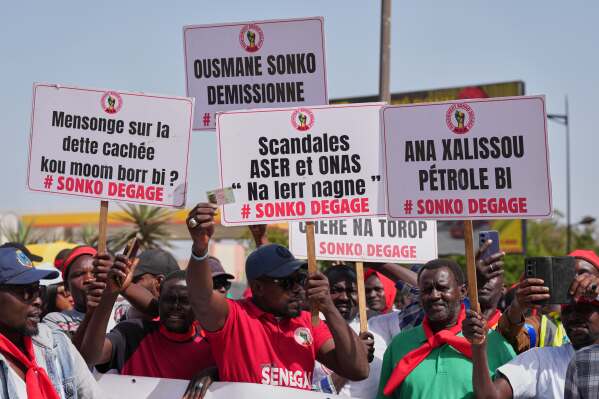
The demonstration was coordinated by Senegal’s main labor unions alongside the opposition coalition Front for the Defense of Democracy and the Republic (FDR).
Mody Guiro, secretary-general of the National Confederation of Senegalese Workers—the country’s largest union—stated that the government broke an agreement made last year, which had suspended strikes in return for commitments to improved wages and working conditions.
Officials argue that a historic debt burden, inherited from the previous administration, has left the government with minimal fiscal flexibility.
Protesters, many wearing red scarves and union caps, carried placards demanding the reinstatement of dismissed public workers and a reduction in income taxes. Some chanted slogans calling for the resignation of Prime Minister Ousmane Sonko.
“The main issue with the country’s economy is Ousmane Sonko. He lacks the competence to lead and should step down,” said opposition supporter Thierno Sylla.
The government, led by Prime Minister Sonko and President Bassirou Diomaye Faye, took office in April 2024 with a promise to implement sweeping reforms, including anti-corruption measures, youth job creation, and maximizing the nation’s natural resources.
However, the ruling PASTEF party has faced significant hurdles in executing its agenda. A 2025 audit uncovered a debt of $13 billion, higher than previously reported, inherited from the prior administration. Negotiations with the International Monetary Fund for a new financial plan have stalled amid the worsening fiscal outlook.
Senegal’s debt-to-GDP ratio has soared to about 132%, ranking among the highest on the continent.
The country’s economic challenges have intensified the struggles of everyday citizens, with youth disproportionately affected, as nearly 75% of the population is under 35.
“The economic climate in Senegal remains harsh,” said Babacar Ndiaye of WATHI Think Tank. “The opposition sees this rally as a platform to make their grievances heard.”
In February, demonstrations at Senegal’s leading public university over unpaid financial aid were met with force by security personnel, resulting in the death of a student.
“The country is essentially paralyzed. The government must focus on revitalizing the economy instead of engaging in constant conflicts,” said youth activist Mohamed Fall during Wednesday’s protest.
Pape Laobe Samb, one of more than 700 workers laid off from the port of Dakar since early 2025 amid state institution reforms, also voiced frustration. “This is not what was promised. They pledged job creation and national development but delivered the opposite,” Samb said, noting he had worked at the port for over 12 years.
The port’s director, appointed shortly after President Faye assumed office, described the dismissals as a cleanup of irregular contracts left by the previous government.
Unions, however, contest this explanation, arguing that the terminated employees were largely linked to the prior administration and that the layoffs were illegal.