

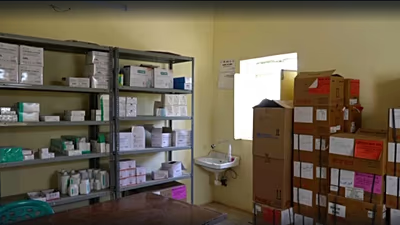
Inside a modest health facility in a remote part of rural Sudan, pharmacy shelves are gradually running bare, with staff uncertain about when the next batch of medicines will arrive.
Ongoing disruptions to global shipping linked to the Iran war are preventing essential drugs from reaching already vulnerable communities facing a deep humanitarian crisis.
The clinic is under strain as it tries to care for thousands of patients, with Sudan now in its fourth year of civil conflict and no international medical supplies delivered since December.
Humanitarian organisations warn that the conflict involving Iran has not only disrupted key shipping lanes and driven an energy crisis but has also severely hindered efforts to deliver food and medical aid to millions worldwide.
Critical routes such as the Strait of Hormuz have effectively been blocked, while supply chains through major hubs like Dubai, Doha, and Abu Dhabi have also been affected.
Transport costs rising
Logistics expenses have surged due to higher fuel prices and increased insurance costs, reducing the volume of supplies that can be transported with available funding.
The United Nations reports that shipping costs have risen by as much as 20%, alongside delays caused by rerouted deliveries.
A glaucoma patient, Abbas Awad, said the situation has been extremely difficult, as financial challenges are now compounded by disruptions tied to the Middle East conflict.
He explained that access to his eye medication can now be interrupted for weeks, sometimes forcing him to seek help from countries like Saudi Arabia or Egypt, or go without treatment entirely, worsening his condition.
The International Rescue Committee, which assists the clinic where Awad receives care, revealed that pharmaceuticals worth around $130,000 meant for Sudan were stuck in Dubai for weeks and are only now being delivered months behind schedule.
Growing frustration
According to the IRC, essential supplies including Amoxicillin, Benzylpenicillin, Prednisolone, Ibuprofen, and even basic equipment like stethoscopes originally scheduled to be flown from the United Arab Emirates to Port Sudan had to be rerouted.
Instead, the items were transported by road from the UAE to Oman before being flown out, adding both time and cost to the delivery process.
Although the supplies are now on the way, further delays are still expected before they reach those in need.
Ahmed Ibrahim, an IRC staff member at the clinic, said patients are becoming increasingly frustrated, especially since the last shipment of medicines arrived in December.
He noted that many people question why the clinic remains open when there are no drugs available to dispense.
For roughly 5,000 residents who depend on the IRC-supported clinic in Qoz Nafisa, the shortage means paying out of pocket often unaffordable and travelling from one facility to another in search of treatment.
Nearby, Rashiqa Alqadi has been struggling to find medication for her granddaughter, who lives with severe epilepsy.
She shared that she has explored every option, from traveling to other towns to checking social media platforms in hopes of locating the drugs.
While accessing medication has been difficult for years, she said the situation has worsened significantly since the conflict in Iran began.
She added that even when supplies seem available one day, there is no guarantee they will be accessible the next.