

African governments together with France have endorsed a broad economic and geopolitical declaration urging a move away from extractive trade systems, arguing that distortions in the global economy are hurting Africa’s industrial growth ambitions.
The declaration was issued after the Africa Forward Summit held in Nairobi and was shared on Wednesday, May 13, 2026, through the verified X account of William Ruto. It presents a joint agenda focused on industrial development, artificial intelligence, debt restructuring, renewable energy, healthcare systems, maritime security and regional trade integration.
A major focus of the agreement is Africa’s growing demand for economic independence, with leaders advocating a transition from reliance on raw material exports to increased local production, processing and regional manufacturing chains.
According to the declaration, Africa’s natural resources, including critical minerals, must be used to drive local industrialisation, value addition and employment creation across the continent.
Leaders further expressed concern that global structural imbalances and unfair non-market practices are lowering commodity prices, discouraging industrial investment and weakening the competitiveness of emerging African industries.
The declaration also highlighted worries over rising tensions within the international trade system and increasing fragmentation in the global economy, although no specific countries were mentioned.
African states additionally called for stronger representation in global financial institutions, including reforms to the International Monetary Fund and the broader international debt system.
Governments across the continent argued that high sovereign debt levels, expensive borrowing conditions and limited access to affordable long-term financing continue to slow development efforts.
Artificial intelligence and digital sovereignty featured prominently in the agreement, reflecting Africa’s determination to gain greater control over data infrastructure and emerging technologies.
Participating countries pledged support for African-led ownership of AI technologies, local language models, regional data centres and open-source digital infrastructure, while seeking to reduce dependence on dominant global technology powers.
The emphasis on AI comes at a time when countries worldwide are competing for influence over artificial intelligence regulation, semiconductor supply networks and digital infrastructure investments.
Beyond technology, the declaration outlines plans for stronger collaboration in green industrialisation, renewable energy, maritime industries, vaccine production and trade integration through the African Continental Free Trade Area.
Security concerns also featured strongly during the summit. In a separate peace and security statement, leaders opposed external interference and criticised the growing privatisation of security operations by foreign actors, a position likely to attract global attention amid increased foreign security involvement in parts of Africa.
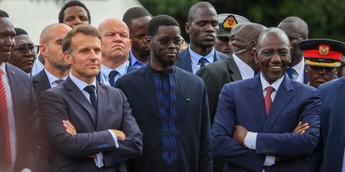
The Nairobi summit brought together African presidents, French representatives and officials from institutions such as the World Bank, the African Development Bank, the European Investment Bank and other international development organisations.
The declaration is expected to shape wider discussions ahead of upcoming G7 and international financing meetings later this year, where African countries are pushing for stronger influence over decisions related to trade, debt and climate funding.