

Following widespread international attention on the unlawful recruitment of Kenyan nationals into the Russia-Ukraine conflict, the Kenyan government has coordinated efforts to bring these citizens home.
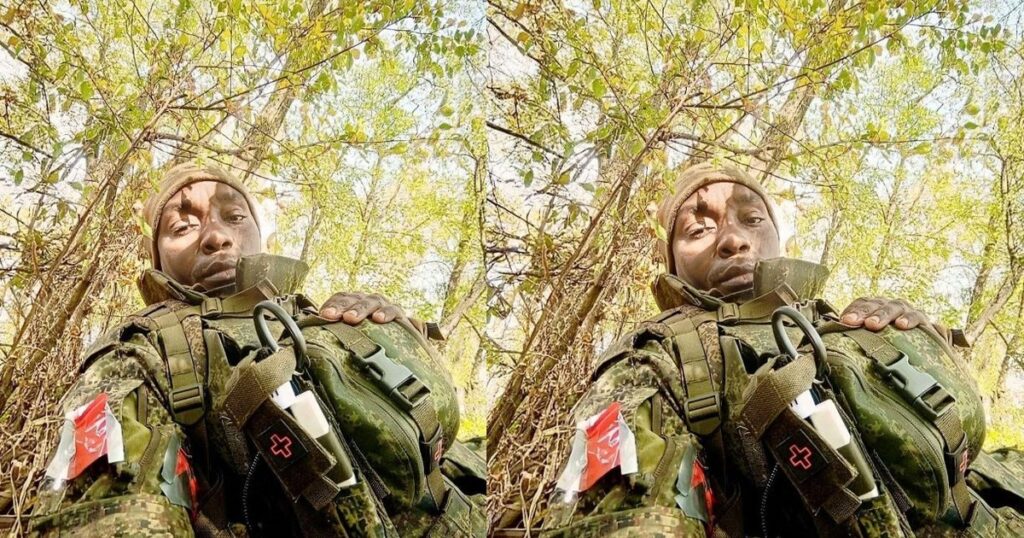
To date, the East African nation has successfully repatriated around 47 of its nationals who were participating in the war.
Despite these efforts, the problem persists, as reports indicate that some Kenyans continue to enlist voluntarily in the conflict.
In response, the Kenyan authorities have issued a stern warning, declaring that joining foreign wars without authorization will now carry legal consequences.
According to Bloomberg, Kenya’s Foreign Secretary, Musalia Mudavadi, reminded parliamentarians on Wednesday that citizens cannot serve in the military, police, or other armed forces of other countries without prior government approval, as stipulated under Kenyan penal law.
Under these regulations, conscription into foreign armies is illegal, with offenders facing penalties of up to ten years imprisonment.
The minister emphasized that most Kenyans who joined the Russia-Ukraine conflict did so knowingly and willingly.
“Once involvement is confirmed, individuals will face the full extent of the law for participating in criminal activities,” he stated.
Foreign Secretary Mudavadi noted that recruits were often enticed with offers of Russian citizenship and signing bonuses of up to 3 million Kenyan shillings (approximately $23,000).
Following mounting media attention, Russia reportedly halted its recruitment of Kenyan fighters.
Data from the NGO Inpact, which manages the All Eyes On Wagner initiative, indicates that around 316 Africans have died fighting in Ukraine, with many receiving little to no formal military training.
Estimates suggest that nearly 1,780 Africans from 36 countries have been drawn into the conflict.
Kenya’s foreign ministry revealed last month that 252 Kenyans had been illegally conscripted into Russia’s military operations, with at least 10 feared dead and 38 injured.
Investigations show that young Africans, especially from nations facing high unemployment and economic instability, such as Kenya, are being targeted for recruitment under the guise of lucrative civilian jobs, security roles, or educational opportunities.
Recruiters typically approach unemployed individuals, former police officers, and ex-military personnel with promises of bonuses up to 1.2 million Kenyan shillings ($9,309) and monthly salaries of about 350,000 shillings ($2,715).
Reports further indicate that some recruits had their travel documents confiscated upon arrival and were then pressured or coerced into fulfilling military contracts.
These agreements are often written in Russian or use complex legal terminology, making them difficult for recruits to fully understand.
Recruitment operations frequently rely on social media advertisements, informal intermediaries, and clandestine networks.
In certain cases, forged passports and covert transit routes through foreign countries were used to secretly move recruits to conflict zones.